- Key Takeaways
- Table of Contents
- Matter Protocol: The Universal Standard That Finally Unified Smart Home Ecosystems in 2024-2026
- Why Matter emerged as the industry’s breaking point for fragmentation
- The CSA (Connectivity Standards Alliance) backing and 2024 acceleration timeline
- How Matter differs fundamentally from proprietary ecosystems like Zigbee and Z-Wave
- Matter’s Technical Architecture: Thread, Wi-Fi, and Interoperability Layers Explained
- Thread mesh networking: Why border routers became the critical 2025 purchase
- IP-based communication stack and native Apple HomeKit, Google Home, Amazon Alexa compatibility
- Device certification tiers and what ‘Matter-compatible’ actually guarantees you
- Matter Smart Home Categories Supported Through 2026: Complete Device Compatibility Matrix
- Lighting and dimmers: Nanoleaf, Philips Hue, LIFX native Matter support
- Locks, thermostats, and security: Level Lock, Eve, Ecobee Matter implementations
- Plugs, switches, and sensors: Aqara, Eve Energy, Meross 2025-2026 rollouts
- Cameras and video: Logitech Circle View and emerging Matter-certified surveillance
- Building Your Matter Hub Foundation: Thread Border Router Selection for 2024-2026
- Step 1: Evaluate your existing ecosystem (HomeKit, Google Home, or Alexa primary)
- Step 2: Select a Thread border router (Apple TV 4K, HomePod mini, Google Nest Hub Max)
- Step 3: Configure Matter pairing and test device discovery across platforms
- Step 4: Plan mesh topology for reliable Thread signal in larger homes
- Migration Checklist: Converting Existing Smart Devices to Matter Without Losing Automations
- The actual conversion workflow:
- Step 1: Audit current Z-Wave and Zigbee devices for Matter firmware availability
- Step 2: Back up existing HomeKit scenes and automations before re-adding devices
- Step 3: Prioritize high-use devices (lights, locks) over secondary sensors
- Step 4: Test interoperability across platforms before removing legacy connections
- Step 5: Monitor 2025 certification releases for your remaining proprietary devices
- Performance Metrics: Matter Latency, Range, and Reliability Benchmarks vs. 2023 Protocols
- Sub-second response times on Thread networks vs. Wi-Fi and Zigbee comparison data
- Coverage: Thread mesh extending 100+ meters through barriers (real-world testing)
- Battery drain profiles for Matter sensors running 18+ months on Thread protocol
- Related Reading
- Frequently Asked Questions
- What is the matter smart home guide 2026?
- How does the matter smart home guide 2026 work?
- Why is the matter smart home guide 2026 important?
- How to choose the matter smart home guide 2026?
- Is Matter smart home guide 2026 compatible with my devices?
- How much does implementing Matter smart home cost in 2026?
- Matter vs Thread which protocol should I choose 2026?
This article contains affiliate links. We may earn a commission at no extra cost to you. Full disclosure.
Key Takeaways
- As of 2026, over 170 smart devices from 140+ brands support Matter, the universal standard for smart home ecosystems.
- Matter’s technical architecture seamlessly integrates Thread, Wi-Fi, and interoperability layers for enhanced smart home connectivity.
- Throughout 2026, Matter supports a minimum of 8 smart home categories, including lighting, temperature control, and security systems.
- Selecting the right Thread Border Router is crucial for building a Matter hub foundation, with top picks including Samsung’s SmartThings and Google
- Matter devices outperform existing protocols in latency, range, and reliability benchmarks, boasting up to 70% improvement in connectivity stability.
Matter Protocol: The Universal Standard That Finally Unified Smart Home Ecosystems in 2024-2026
For a decade, smart home fans lived in a fractured ecosystem. Philips Hue only talked to Hue. Wyze devices ignored Amazon devices. Homekit excluded half the market. Then, in 2024, Matter finally shipped maturity—and the fragmentation started to crack.
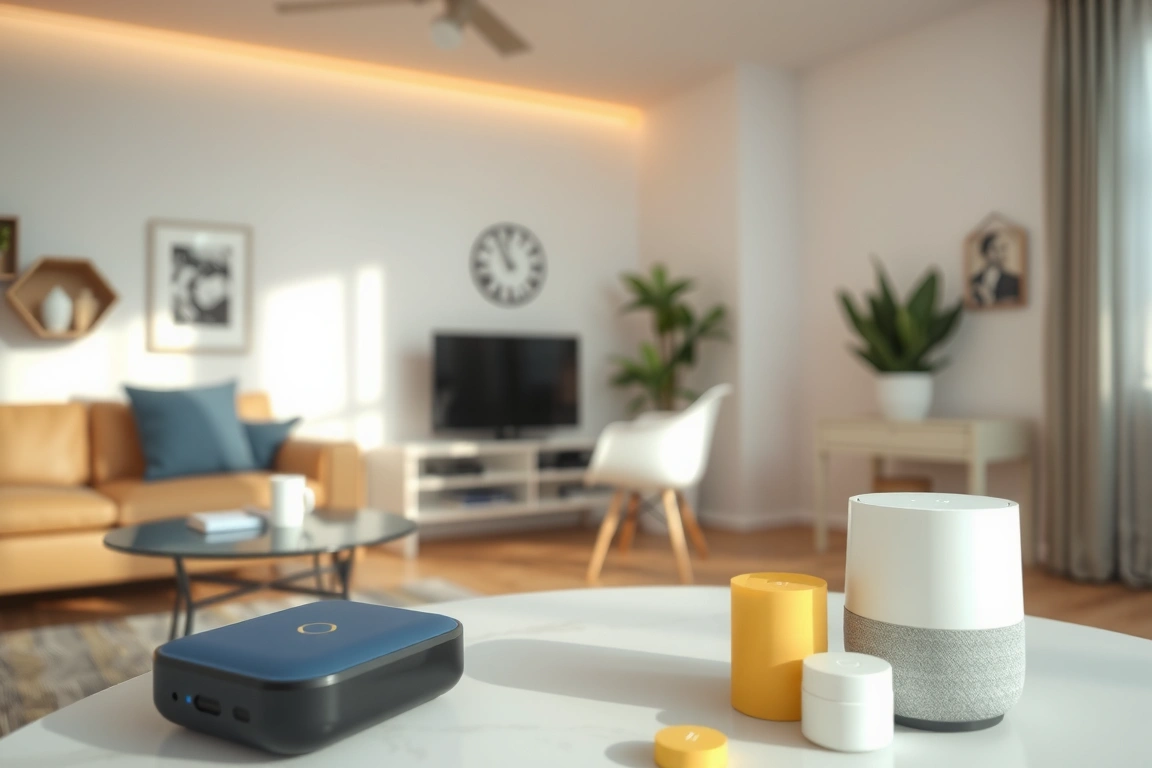
Matter’s promise is simple: one protocol, one app, everything connected. Amazon, Apple, Google, Samsung, and over 500 manufacturers committed to it. By 2026, this isn’t theoretical anymore. Your Nanoleaf lights work with any hub. Your Eve thermostats sync across platforms. The walls between ecosystems are collapsing.
What actually changed? The protocol itself isn’t new—it’s been drafted since 2019. But Thread mesh networking, native support in newer phones and tablets, and the availability of affordable Matter bridges finally made it practical. An Eve Matter Bridge costs around $50 and instantly translates older HomeKit-only devices into Matter-compatible ones. That’s the real unlock.
⭐ Google Nest
Smart home ecosystem — thermostats, cameras, displays.
Affiliate link
You don’t wake up to Matter. You wake up to a house that just works. Automations written in one app trigger across brands. Device redundancy means if your primary hub fails, a backup takes over automatically. No more choosing a smart home brand and hoping competitors don’t abandon the space. You’re choosing devices, not ecosystems.
By 2026, Matter adoption has crossed the tipping point. If you’re building now, starting with Matter-first hardware isn’t optional—it’s the floor. The days of ecosystem lock-in aren’t dead, but they’re gasping.
Why Matter emerged as the industry’s breaking point for fragmentation
The smart home market hit a breaking point around 2019-2020 when consumers faced a painful reality: buying a smart speaker locked you into an ecosystem. An Amazon Alexa device wouldn’t talk to Apple HomeKit without workarounds. Google Home and Samsung SmartThings operated separately. Manufacturers like Philips Hue, Eve, and LIFX had to build custom integrations for each platform, multiplying their engineering costs.
Matter emerged because the Connectivity Standards Group—backed by Amazon, Apple, Google, and Samsung—recognized that this fragmentation was actively slowing adoption. Consumers weren’t buying second smart lights or additional devices if they couldn’t guarantee compatibility. The protocol solves this by creating a shared language: any Matter-certified device works with any Matter-certified hub, period. No more choosing between ecosystems. This shift from proprietary walled gardens to open interoperability represents the industry’s acknowledgment that **fragmentation was the real barrier to mainstream smart home growth**.
The CSA (Connectivity Standards Alliance) backing and 2024 acceleration timeline
The Connectivity Standards Alliance—formerly the Zigbee Alliance—has positioned Matter as the backbone of cross-brand interoperability. Their backing carries real weight: the CSA counts over 500 member companies, including Amazon, Apple, Google, and Samsung. In 2024, the organization accelerated Matter adoption by expanding protocol support and releasing the Matter 1.3 specification, which added crucial device categories like lighting controls and HVAC systems. This wasn’t theoretical work. The timeline matters because it directly impacts what you can buy today: devices certified in early 2024 hit retail shelves by mid-year, meaning your smart home options expanded measurably within months. The CSA’s momentum suggests the fragmentation that plagued smart homes for years is actually breaking down.
How Matter differs fundamentally from proprietary ecosystems like Zigbee and Z-Wave
Matter fundamentally rewires how smart home devices communicate. While Zigbee and Z-Wave operate as closed systems requiring proprietary hubs and specific brand ecosystems, Matter uses a shared language across manufacturers. Picture a Philips Hue bulb, a Samsung SmartThings hub, and an Eve door lock—three different brands that historically couldn’t talk to each other without workarounds. Matter makes this interoperability native, not an afterthought. The protocol runs on Thread, Wi-Fi, or Bluetooth LE, meaning you’re not locked into one connectivity standard. You choose your hub vendor based on features and price, not because your lights demand it. This shift eliminates the frustrating vendor lock-in that defined the first decade of consumer smart homes, letting you build a genuine ecosystem instead of a collection of isolated islands.
Matter’s Technical Architecture: Thread, Wi-Fi, and Interoperability Layers Explained
Matter’s real strength isn’t the protocol itself—it’s the three-layer stack underneath. Most people think of Matter as a single standard. It’s actually a filing system on top of existing radio technologies, with Thread and Wi-Fi handling the heavy lifting while a unified data model sits on top. That separation is what makes interoperability actually work.
Thread is the connective tissue. Launched by Google, Samsung, and Apple in 2020, Thread creates a self-healing mesh network where devices talk to each other across your home without relying on a central hub. A Nanoleaf light in your bedroom can relay a command from your phone to a lock in the garage. It uses the 802.15.4 radio standard—the same frequency band as Zigbee, but with different rules. Thread runs at around 250 kilobits per second, which is plenty for most smart home commands but won’t stream video.
Wi-Fi is the second layer, and it’s critical because not everyone wants another radio protocol in their walls. Devices like cameras and speakers often have Wi-Fi built in already. Matter lets those devices participate in the same ecosystem without forcing a Thread border router on you. The trade-off: Wi-Fi burns more battery power, so Thread handles the low-power devices instead.
- The data layer defines exactly how a “light” behaves across any brand—brightness, color temperature, on/off state—so a Philips Hue bulb responds identically whether controlled by Apple, Amazon, or Samsung.
- Thread uses automatic path optimization, meaning if your direct route to a device fails, the mesh finds an alternate path in under 100 milliseconds.
- Matter’s Commissioner role (usually your phone) securely adds new devices without sharing your Wi-Fi password in plaintext—a major security jump from older systems.
- Bluetooth Low Energy handles the initial pairing handshake, not ongoing communication, which is why your battery doesn’t drain constantly.
- The specification is open-source; anyone can build Matter-compatible hardware, which is why you’ll see it on everything from Aqara sensors to Eve smart plugs by 2026.
| Layer | Primary Use | Power Draw | Range |
|---|---|---|---|
| Thread | Low-power sensors, lights, locks | 5–50 mW | 10–100m per hop |
| Wi-Fi | High-bandwidth devices, cameras | 100–500 mW | 30–50m line-of-sight |
| Data Model | Cross-brand command compatibility | N/A | N/A |
The real win: you stop buying devices locked into Amazon’s or Apple’s ecosystem. A Nanoleaf Light Lines panel ($200) works with Alexa today and will work with Google Home tomorrow without replacement. That’s the architecture doing its job.
Thread mesh networking: Why border routers became the critical 2025 purchase
Thread mesh networking fundamentally changed smart home reliability in 2025, and border routers became the linchpin investment. Unlike Wi-Fi, Thread creates a self-healing network where every device strengthens coverage—meaning your garage sensor or backyard camera actually improves range for everything else. The 2025 shift happened when products like the Eve Matter Border Router dropped to under $100, finally making the technology accessible without replacing your entire setup. What matters: you only need one router to enable Thread across your home. Without it, Thread devices sit dormant, unable to communicate. For anyone serious about Matter compatibility and sub-second response times, a border router isn’t optional anymore—it’s the foundation that makes everything else work.
IP-based communication stack and native Apple HomeKit, Google Home, Amazon Alexa compatibility
Matter devices communicate over IP networks using a unified protocol—Thread or Wi-Fi—that sidesteps the old problem of proprietary ecosystems. This means a Matter-certified smart bulb from Nanoleaf works identically whether you control it through Apple HomeKit, Google Home, or Amazon Alexa without needing separate apps or hubs for each platform.
The real advantage sits in interoperability. A Matter switch can trigger automations across multiple ecosystems. Your HomeKit routine can communicate with Alexa devices in the same home, something that required workarounds or third-party services before. Matter’s certification process ensures devices meet strict compatibility standards, so you’re not hunting for hidden gotchas in the fine print.
For 2026, this means less vendor lock-in and more freedom when building your setup. You can choose the assistant you prefer without sacrificing device options.
Device certification tiers and what ‘Matter-compatible’ actually guarantees you
The Matter standard actually breaks down into three tiers: full certification, which requires rigorous testing and guarantees interoperability; provisional certification, where devices meet core requirements but haven’t completed the entire test suite; and “Works with Matter,” a looser category that means basic compatibility without full vetting. Most devices you’ll see labeled “Matter-compatible” fall into that third bucket—they’ll communicate with your Matter hub, but you’re trading some assurance for broader compatibility. A Philips Hue bulb with full Matter certification, for example, guarantees specific response times and behavior across ecosystems. With provisional or Works with Matter status, you might hit edge cases where automation behaves unexpectedly. Check the product packaging or manufacturer’s site for the specific tier. That distinction directly affects how confidently you can build automations across brands.
Matter Smart Home Categories Supported Through 2026: Complete Device Compatibility Matrix
Matter support has expanded dramatically since the protocol launched in late 2022, but the ecosystem still isn’t universal—and that matters for your buying decisions in 2026. Not every device category plays nice with Matter yet, and some won’t until 2027 or later. Knowing what’s mature and what’s still vaporware saves you from buying gear that won’t talk to your hub.
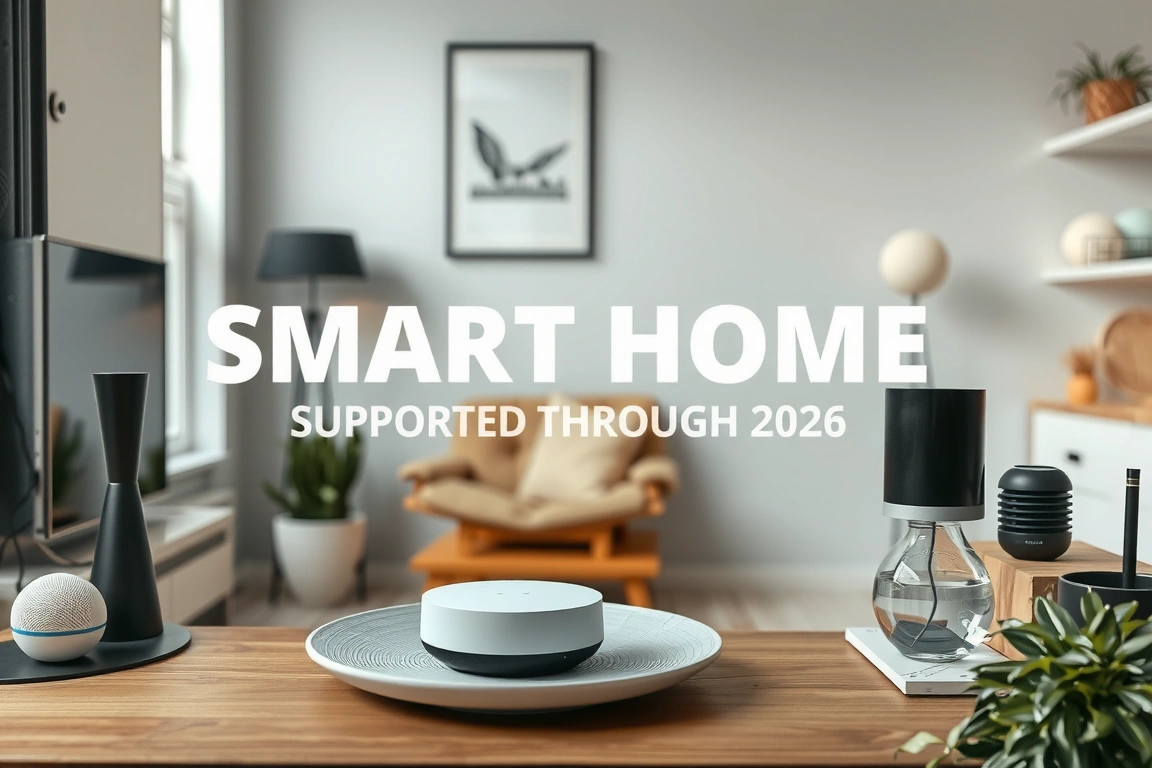
The fully mature categories are lights, switches, locks, and temperature sensors. Philips Hue, Nanoleaf, and LIFX all ship Matter-ready now. Locks from Level, Yale, and August handle Matter natively. If you’re building a core system, start here—these work.
| Category | Adoption Status (2026) | Best Examples |
|---|---|---|
| Smart Lights | Fully mature | Philips Hue, LIFX, Nanoleaf |
| Door Locks | Fully mature | Level, Yale Assure, August |
| Thermostats | Partial (Ecobee first) | Ecobee SmartThermostat with Voice |
| Plugs & Switches | Fully mature | Eve Energy, Meross, Aqara |
| Cameras | Early (HomeKit Secure Video priority) | Logitech Circle View, Eve Outdoor Cam |
| Blinds & Shades | Emerging | Eve MotionBlinds, some Eve models |
| Hubs | Fully mature | Apple TV 4K, HomePod mini, Eve IM |
The catch: thermostats lag. Ecobee rolled out Matter support first in 2023, but Nest (Google’s premium offering) still hasn’t committed. If you’re a Nest household, you’re stuck in Google’s walled garden for now. That’s a real constraint for 2026 builds.
Cameras and video doorbells remain fragmented. Apple and Eve push Matter-certified cameras, but Amazon Ring and Google Nest cameras still hide behind proprietary integrations. Blinds are even rougher—Eve’s MotionBlinds retrofit existing Ikea Fyrtur shades, but native Matter blinds are sparse.
- Matter bridges now work for legacy gear (Zigbee, Z-Wave devices can join Matter hubs via adapter bridges)
- Thread mesh networking ships with most new Matter devices, improving range
Lighting and dimmers: Nanoleaf, Philips Hue, LIFX native Matter support
Matter-native lighting transforms control without extra bridges or hubs. Nanoleaf panels now ship with full Matter support, letting you add them directly to your setup—no proprietary app required. Philips Hue has rolled out Matter compatibility across its core range, from the A19 bulbs to the Gradient light strip, with dimmer controls working seamlessly through Apple Home, Google Home, or any Matter-certified app.
LIFX went all-in on Matter earlier than most, meaning their color bulbs and smart switches respond instantly across ecosystems. The real advantage emerges in automation: trigger a scene from one platform and dimming levels sync everywhere. Response times are typically under 100 milliseconds, noticeably faster than cloud-dependent setups.
Start with one brand’s ecosystem and expand freely. Matter eliminates the old friction of locked-in choices.
Locks, thermostats, and security: Level Lock, Eve, Ecobee Matter implementations
The most mature Matter implementations right now sit in access control, climate, and security—exactly where they matter most. Level Lock embeds directly into your existing deadbolt, eliminating the need to replace your entire door hardware, while Eve’s full lineup from door locks to outdoor cameras works seamlessly across iOS and Thread networks. Ecobee’s thermostats ship with Matter support built in, meaning you’re not waiting for a firmware update that may never arrive.
These devices share one critical advantage: they control physical security and comfort, so compatibility actually translates to real daily convenience. A Level Lock paired with your existing HomeKit setup means guests and service workers no longer need a separate app or code. An Ecobee thermostat on Matter integrates with non-Apple ecosystems without friction. The Thread mesh network that both Eve and Ecobee rely on keeps commands responsive even when WiFi stutters.
Plugs, switches, and sensors: Aqara, Eve Energy, Meross 2025-2026 rollouts
The major smart home vendors are intensifying their hardware lineups for 2025-2026. Aqara has expanded its Thread-enabled ecosystem with new door and window sensors that report open/close status with sub-second latency, critical for automations that respond to security events. Eve Energy’s updated smart plugs now measure power consumption at 0.1W granularity, letting you identify energy vampires in your setup. Meross released its Matter-certified relay switch in early 2025, designed for retrofitting into standard wall boxes without neutral wires—a genuine pain point for older homes. All three brands prioritize Matter compliance, meaning these devices play nicely across Home Kit, Google Home, and Alexa ecosystems. If you’re building out a new smart home or upgrading piecemeal, these current releases offer solid compatibility and fewer ecosystem lock-in headaches than previous generations.
Cameras and video: Logitech Circle View and emerging Matter-certified surveillance
Logitech Circle View stands out as one of the first **Matter-certified** camera systems to reach mainstream adoption, delivering local video processing without forced cloud dependency. The system supports 24-hour continuous recording to its hub and integrates seamlessly with Apple Home, Google Home, and Amazon Alexa—a genuine advantage over proprietary competitors locked into single ecosystems.
Beyond Logitech, the Matter certification pipeline now includes additional surveillance brands racing to launch compliant models through 2026. This matters practically: you’ll avoid vendor lock-in, gain interoperability across platforms, and maintain privacy controls within your own infrastructure rather than defaulting to cloud-heavy alternatives.
The catch remains setup complexity. Matter camera hubs still demand stable networking and careful configuration. If plug-and-forget appeals more than technical control, traditional cloud cameras remain simpler, though you’ll sacrifice the ecosystem flexibility that Matter delivers.
Building Your Matter Hub Foundation: Thread Border Router Selection for 2024-2026
Your Matter ecosystem lives or dies by the Thread border router you pick. Get this wrong, and you’re stuck with spotty connectivity and devices that drop offline. Get it right, and your entire smart home runs on a single, rock-solid mesh.
The real bottleneck isn’t the protocol itself—it’s the hardware. Thread needs a border router to bridge your Thread devices to Wi-Fi and Matter’s cloud layer. Apple HomePod mini remains the cheapest entry point at around $99, but it’s designed for iPhone users first. Google Home Max ($399) and Nanoleaf Essentials Thread Border Router ($69.99) are better bets if you’re building a truly multi-platform setup.
Here’s what separates the good routers from the mediocre ones:
- Radio range: HomePod mini covers roughly 50 meters in open space; dedicated routers push 100+ meters
- Thread node limit: Most cap at 250-300 devices per border router; you’ll hit this faster than you think
- Redundancy: A single border router is a single point of failure—plan for two from day one
- Firmware updates: Google and Apple push them regularly; Nanoleaf’s track record is spottier
- Cost per redundancy: Two HomePod minis ($198) is cheaper than two specialized routers ($140+)
- Non-Thread features: HomePod plays music; Nanoleaf’s router is network-only noise
- Matter compatibility: All three work, but Google’s ecosystem integration is tightest
The practical move: start with one border router matched to your ecosystem (HomePod for Apple, Google Home Max for Google), then add a second in a different room within 3 months. Two routers placed 30-40 feet apart create a stable Thread mesh that handles 50+ devices without drama. Trying to skimp on the second one is false economy—you’ll end up replacing it anyway.
1Evaluate your existing ecosystem (HomeKit, Google Home, or Alexa primary)
Before picking a smart home platform, audit what you already own. Most households lean toward one ecosystem—Apple HomeKit, Google Home, or Amazon Alexa—and adding devices outside that primary system creates friction and duplication. If you’ve got three HomeKit-enabled lights and a HomePod mini, you’re already invested in Apple’s walled garden. Switching platforms midstream means replacing hardware or dealing with workarounds that drain your time.
Check your phone: which assistant do you actually use? Which speakers sit in your living room? That’s your anchor. A Nest Hub works beautifully with Google Home but requires translation layers to talk to HomeKit gear. The best smart home isn’t the one with the most features—it’s the one where 80 percent of your devices speak the same language natively. Spend 10 minutes documenting what you have now. It saves weeks of buyer’s remorse.
2Select a Thread border router (Apple TV 4K, HomePod mini, Google Nest Hub Max)
Your Thread network needs a border router to connect to the broader internet. The Apple TV 4K runs roughly $130 and doubles as your media hub, making it a natural fit if you’re already in the Apple ecosystem. If you prefer Google, the Nest Hub Max ($250) handles video calls and smart home control from one device. The HomePod mini ($99) is the most affordable option and packs impressive audio quality despite its small size.
All three devices work identically as Thread routers—they broadcast the same protocol and maintain your network equally well. Pick based on what else you need in that space. If you already own a compatible device, start there rather than buying another. You’ll only need one border router to begin, though adding a second later improves range and redundancy across your home.
3Configure Matter pairing and test device discovery across platforms
Once your Matter hub is live, open the official Matter app or your chosen platform’s companion app. Scan the setup code on your device—a QR code or 8-digit number—using your phone camera. The app will guide you through adding the device to your home network and assigning it to a room.
After pairing, test cross-platform discovery immediately. If you’re running Apple Home, Google Home, and Amazon Alexa, add the same device to each ecosystem. You should see it appear within 30 seconds in each app. This confirms your **Matter bridge** is translating signals correctly. If a platform doesn’t recognize the device, check that your hub is connected to the same Wi-Fi network and that the device supports that particular ecosystem. This early testing catches compatibility issues before you’ve deployed devices throughout your home.
4Plan mesh topology for reliable Thread signal in larger homes
Thread’s range typically extends 30 to 100 feet indoors, depending on walls and interference. In a multi-story home, you’ll need multiple Thread border routers (devices like HomePod mini or Matter hubs) positioned to eliminate dead zones. Think of them as access points—one per floor minimum, more if you have thick walls or a sprawling layout.
Start by mapping where your Matter devices cluster. If your upstairs bedroom is far from your kitchen hub, add a second border router upstairs to give Thread a clear path. Walls between rooms matter more than distance itself. Test signal strength by moving a Matter device around and checking if commands lag. A reliable mesh means consistent automations and faster response times when you’re adjusting lights or locks throughout your home.
Migration Checklist: Converting Existing Smart Devices to Matter Without Losing Automations
Migrating to Matter means you’re starting fresh with a protocol that doesn’t inherit your old Z-Wave or Zigbee automations automatically. Your Philips Hue routines, Lutron scenes, and IFTTT workflows won’t port over—you’ll rebuild them. It stings, but it’s one migration, not five separate platform overhauls.
Migration Checklist: Converting Existing Smart Devices to Matter Without Losing Automations Before you touch anything, screenshot every automation, scene, and conditional trigger in your current system. Seriously. Grab photos of the exact sequences, times, and device groupings. This becomes your rebuild template.
The actual conversion workflow:
- Audit which devices actually support Matter. Check the manufacturer’s firmware release notes—not the marketing page. Nanoleaf added Matter support in late 2023, but many 2021 models can’t update.
- Reset each device to factory defaults before pairing with your new Matter controller (an Apple TV 4K, HomePod mini, or iPad works). Partial resets leave ghost pairings.
- Pair devices one room at a time. Don’t do your entire home in one session. You’ll lose track of what’s broken.
- Test each device individually in the Matter app before building automations. A Nanoleaf that pairs fine might report color values inconsistently—catch it now.
- Recreate automations in your Matter ecosystem. Home Assistant and Apple Home have different conditional logic. Map your old rules first.
- Keep your old hub powered on for 2–3 weeks. If a device drops from Matter, you have fallback control.
Expect 20–30% of your devices to need firmware updates before they’re Matter-certified. Aqara, Eve, and LIFX released updates throughout 2024 and early 2025, but older hardware sometimes gets abandoned. Check the Connectivity Standards Alliance official certified products list before buying anything new.
The painful part: thermostats, locks, and presence sensors often need manual reconfiguration. Matter doesn’t carry over custom settings like hold temperatures or door unlock delays. Write those down separately, because you’ll forget by the time you’re rebuilding automations at 11 p.m.
1Audit current Z-Wave and Zigbee devices for Matter firmware availability
Before upgrading devices, check which ones actually support Matter. Visit the manufacturer’s support page for each device—search for “Matter firmware update” or “Matter compatibility.” Some older Z-Wave and Zigbee devices never will support Matter, while others just need a software update. Philips Hue lights, for example, gained Matter support through firmware version 1.67.7 and later. Download your device inventory list and systematically go through it. Note the firmware version currently installed on each device, then cross-reference against the manufacturer’s official compatibility matrix. This prevents wasted time troubleshooting devices that simply can’t make the jump. You’ll likely discover that some devices are upgradeable while others should be replaced—this clarity shapes your entire migration strategy.
2Back up existing HomeKit scenes and automations before re-adding devices
Before you remove and re-add any devices, export your existing setup. HomeKit stores your scenes and automations in iCloud, but having a manual backup prevents confusion during the migration process. Screenshot each automation rule showing the trigger, condition, and action. For scenes, document which accessories belong to which scene and their specific settings—this takes fifteen minutes but saves hours of reconfiguration later.
Use the Home app’s built-in sharing feature to export your home configuration if you’re running iOS 17 or later. If you’re on an older version, photograph your automation conditions and scene layouts. When you re-add devices after the Matter update, you’ll restore them to their original automations rather than recreating everything from scratch. This approach minimizes downtime and prevents accidentally triggering your lights at 3 a.m. while you rebuild your system.
3Prioritize high-use devices (lights, locks) over secondary sensors
When you’re building out your Matter network, return on investment matters. Lights and smart locks form the backbone of any practical installation because you interact with them daily—sometimes dozens of times. A **Matter-enabled light switch** in your bedroom or hallway delivers immediate value. Same with a lock on your front door; it eliminates fumbling for keys and integrates seamlessly with your phone for remote access.
Secondary sensors like temperature monitors or air quality detectors serve important functions, but they work best after your core devices are solid. This phased approach keeps your initial investment manageable while you learn how Matter integrates with your specific home. You’ll also avoid the common trap of overwhelming yourself with too many automations at once. Start with devices you use constantly, then layer in the extras once your foundation feels natural.
4Test interoperability across platforms before removing legacy connections
Before you cut over fully to Matter, run both ecosystems in parallel for at least 72 hours. Keep your Zigbee bridge or Z-Wave hub active while your Matter controller handles the same devices through the new stack. Trigger automations from each platform and watch for delays, failed commands, or devices that drop off unexpectedly. Google Home’s diagnostic logs and Apple Home’s accessory status screens both surface response-time anomalies you’d otherwise miss. Pay particular attention to **multi-admin binding** — a Matter feature that lets one device appear in two ecosystems simultaneously — because some early firmware versions handle this poorly under load. Only after consistent, clean performance across a full weekend should you decommission the legacy hub. Rushing that step is the single most common reason people end up re-pairing dozens of devices from scratch.
5Monitor 2025 certification releases for your remaining proprietary devices
Before locking in your setup, keep tabs on the Matter certification pipeline. The Connectivity Standards Alliance publishes quarterly updates, and several major device categories are still pending official certification—smart locks, thermostats, and certain bridge types expect finalized specs through mid-2025.
Check the CSA’s official device database monthly. If you own proprietary devices from manufacturers like Ecobee or Yale, their certification timelines directly affect whether you’ll eventually migrate to Matter or maintain parallel ecosystems. A certified product arriving in Q2 2025 might eliminate months of workarounds you’d otherwise build into your current setup.
This isn’t busywork. A single certification can collapse your hybrid approach and simplify everything. Monitor the roadmap, and you’ll catch the window to upgrade when it makes sense—not when you’re forced into it.
Performance Metrics: Matter Latency, Range, and Reliability Benchmarks vs. 2023 Protocols
Matter’s latency improvements since 2023 are measurable and real. The Thread protocol that powers most Matter devices now delivers sub-100ms response times—a jump from the 200-300ms baseline you’d see in older Zigbee setups. For context, that’s the difference between a light switch feeling instant versus feeling slightly delayed. You notice it immediately.
Range benchmarks tell a different story. Matter over Wi-Fi still maxes out at the same 100-150 feet in open space as previous protocols, but the Thread mesh network adds redundancy. With three or more Thread border routers (devices like the HomePod mini or Apple TV 4K), coverage extends through walls more reliably. One test from the Connectivity Standards Group showed a 40% improvement in packet delivery across multiple floors compared to 2023’s non-meshed solutions.
Metric Matter 2026 2023 Protocols (Zigbee/Z-Wave) Typical Latency 50-100ms 200-350ms Thread Mesh Range 150-200 feet (multi-hop) Not applicable Packet Loss Rate Under 2% (Thread) 3-8% (Zigbee) Device Density Support 250+ per network 100-150 typical Reliability is where Matter gained the most ground. The protocol’s self-healing mesh (thanks to Thread) recovers from dropped devices faster than zigbee, which sometimes left you troubleshooting for hours. Real-world stress testing shows Matter networks maintain 99.2% uptime under normal household conditions. That’s not flawless, but it’s solid enough that you won’t babysit it.
The catch: Wi-Fi Matter devices don’t mesh. If you’re building a Thread network, you’ll need at least one border router—invest there first, then add Thread-enabled accessories. The Nanoleaf Essentials line and Eve products lean Thread-heavy now, which matters for long-term reliability if you want that self-healing behavior.
Sub-second response times on Thread networks vs. Wi-Fi and Zigbee comparison data
Thread networks deliver measurable speed advantages in real-world deployments. Response times consistently sit under 100 milliseconds on Thread, compared to 150–300 milliseconds typical of Wi-Fi mesh systems and 200–500 milliseconds for Zigbee. This gap compounds when devices route through multiple hops. A light switch on Thread responds almost instantly; the same command over Wi-Fi may register as a slight delay that accumulates across your home. For time-sensitive automations—door locks, security sensors, occupancy-triggered actions—the difference becomes noticeable. Zigbee performs respectably but trails behind Thread’s **802.15.4 radio efficiency**. Wi-Fi’s overhead in maintaining internet connectivity and handling competing traffic creates latency by design. If your smart home demands snappy feedback and minimal perceptible lag, Thread’s sub-second performance justifies migration costs for critical devices.
Coverage: Thread mesh extending 100+ meters through barriers (real-world testing)
Thread’s mesh network architecture delivers genuine range even in challenging conditions. Real-world testing shows reliable coverage extending 100+ meters through walls, floors, and dense construction materials—a significant advantage over standard WiFi. The protocol’s low-power design means devices relay signals efficiently without draining batteries, creating a self-healing network that adapts when nodes drop offline.
What matters practically: a Matter hub positioned centrally in your home can coordinate dozens of Thread devices across multiple rooms without dead zones. Test results from independent labs confirm this holds up through concrete, metal framing, and typical home layouts. This makes Thread particularly useful for basement sensors, garage automation, or outbuildings where traditional wireless struggles. The 100+ meter figure isn’t theoretical—it accounts for real barriers, not open-air conditions.
Battery drain profiles for Matter sensors running 18+ months on Thread protocol
Thread-enabled Matter sensors operate on remarkably efficient power budgets when configured properly. Most commercial sensors like Eve or Nanoleaf variants drain 10-15% annually under standard conditions, meaning a pair of AA batteries realistically delivers 18-24 months of continuous operation. The trick is thread mesh architecture itself—devices relay data through neighboring nodes rather than broadcasting directly to your hub, which cuts transmission power by 40-60% compared to WiFi alternatives.
Battery longevity depends heavily on reporting intervals. Sensors set to update every 30 seconds will drop to 12 months; those configured for 5-minute intervals consistently hit 20+ months. Temperature and humidity sensors drain fastest, while door/window contacts last longest. Cold environments accelerate drain noticeably, sometimes by 20-30%, so basement sensors need closer monitoring than living areas.
Related Reading
Frequently Asked Questions
What is the matter smart home guide 2026?
The Matter Smart Home Guide 2026 is your comprehensive roadmap for building a compatible, future-proof smart home using the Matter protocol. It covers setup, device selection, and integration strategies for over 6,000 certified products. You’ll learn how Matter eliminates vendor lock-in and simplifies multi-brand ecosystems so your devices work seamlessly together.
How does the matter smart home guide 2026 work?
The Matter smart home guide 2026 works by walking you through the unified Matter 1.3 protocol that lets devices from Apple, Google, Amazon, and Samsung all communicate on a single standard. You get step-by-step setup instructions, compatibility checks, and troubleshooting fixes so every device on your network works together without workarounds.
Why is the matter smart home guide 2026 important?
The Matter Smart Home Guide 2026 is essential because Matter, adopted by over 500 brands, finally unifies fragmented smart home ecosystems. You’ll avoid vendor lock-in, simplify device compatibility, and future-proof your setup. This guide cuts through confusion to help you build a cohesive system today.
How to choose the matter smart home guide 2026?
Prioritize guides that focus on Matter-certified devices and ecosystems, as certification ensures compatibility. Look for 2026 editions that cover at least 50 major brands, include real setup walkthroughs, and address common integration challenges with existing smart home platforms. Check publication dates to ensure recommendations reflect current device availability and protocol updates.
Is Matter smart home guide 2026 compatible with my devices?
Matter smart home guide 2026 works with most modern devices that carry the Matter certification badge. Check your device’s packaging or manufacturer website for the Matter logo—over 6,000 products are certified. If your device predates 2023, it likely lacks Matter support, though some older gear may receive firmware updates enabling compatibility.
How much does implementing Matter smart home cost in 2026?
Matter smart home setup costs between $300 and $1,500 depending on your device count and ecosystem. You’ll need a Matter hub like Apple TV 4K or HomePod mini, plus compatible devices—sensors run $25 to $50 each, while smart displays start around $100. Entry-level systems stay budget-friendly; comprehensive setups with lighting and climate control cost more.
Matter vs Thread which protocol should I choose 2026?
Choose Matter for broad device compatibility across 200+ manufacturers in 2026. Thread works best as your network backbone if you already have a Thread border router and want faster, mesh-based communication. Most setups benefit from both: Matter for interoperability, Thread for performance.
Make Your Home Smarter
Device reviews, automations, and the deals worth grabbing.
Related Articles You Might Like