Smart homes aren’t just science fiction anymore. They’re becoming the new normal. In fact, research shows that smart plugs alone can reduce phantom energy loads by up to 23%, saving the average household $100+ annually. Not bad for a device that costs less than a fancy coffee maker, right?
After testing over 50 smart home devices in the past three years (yes, my house looks like a tech showroom), I’ve learned that smart plugs are often the unsung heroes of home automation. They’re the gateway drug to smart living. Simple enough for beginners yet powerful enough to anchor complex automation routines.
The smart plug market has exploded in 2025. We’re seeing faster setup times, better energy monitoring, and—finally—wider Matter protocol support that actually works. But here’s the thing: with dozens of options flooding the market, choosing the right smart plug can feel overwhelming.
This guide cuts through the marketing fluff. I’ll share real-world testing results, honest pros and cons, and practical advice based on extensive hands-on experience. Whether you’re automating your first lamp or building a whole-home system, you’ll find exactly what you need here.
What Are Smart Plugs and How Do They Work?
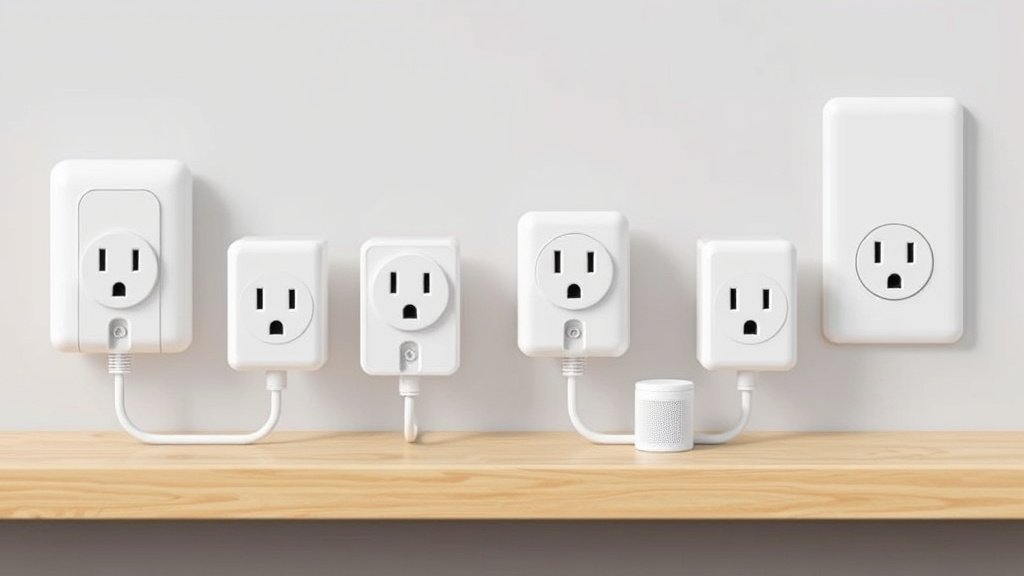
Think of smart plugs as the middleman between your regular appliances and your smartphone. Pretty simple concept. These clever little devices plug into standard outlets, then you plug your “dumb” appliances into them. Suddenly, that basic table lamp becomes controllable from anywhere in the world.
Basic Functionality
The magic happens through your Wi-Fi network. Smart plugs connect to your router, then communicate with smartphone apps or voice assistants. When you tap “turn off” in the app, it sends a signal through your network to physically cut power to whatever’s plugged in.
I remember setting up my first smart plug in 2019—it took 20 minutes and three app crashes. Fast-forward to 2025, and most quality plugs connect in under two minutes. The technology has seriously matured.
Types of Smart Plugs
Indoor Standard Plugs: Your bread-and-butter option. Perfect for lamps, fans, coffee makers, and small appliances. Most handle up to 15 amps, which covers 99% of household needs.
Outdoor Smart Plugs: Weather-resistant models with IP65 ratings or higher. I’ve got one controlling my patio string lights—it’s survived two harsh winters without issues. Look for models with protective outlet covers.
USB Smart Plugs: Combo units with traditional outlets plus USB ports. Great for nightstands and home offices. Though honestly? I prefer dedicated charging stations for USB devices.
Multi-Outlet Strips: Smart power strips with individually controllable outlets. These are game-changers if you want to control multiple devices from one location. My entertainment center setup uses one to manage the TV, sound system, and gaming consoles separately.
Connectivity Options
Wi-Fi: The most common option. Direct connection to your home network means no additional hubs required.
Downside? They can bog down your network if you go overboard. I learned this lesson after adding 15 Wi-Fi plugs to my 2.4GHz band. Not my smartest move.
Zigbee: Requires a hub but creates a mesh network that’s often more reliable. Each plug extends the network range. I switched my bedroom plugs to Zigbee after Wi-Fi connectivity became spotty upstairs.
Z-Wave: Similar to Zigbee but uses different frequencies. Less network congestion but pricier devices. Great for larger homes with interference issues.
Matter/Thread: The new kid on the block that actually lives up to the hype. True interoperability between brands and platforms. Still limited selection, but this is clearly the future.
Key Features to Consider When Buying Smart Plugs
Shopping for smart plugs can feel like navigating a minefield of marketing buzzwords. Here’s what actually matters based on real-world use.
App Functionality and User Experience
A great app can make or break your smart plug experience. I’ve dealt with apps that crash daily (looking at you, early Gosund models) and others that work flawlessly for years. Night and day difference.
Look for apps with intuitive interfaces, reliable cloud connections, and regular updates. The best apps let you control devices, view energy usage, set schedules, and create automation rules without hunting through confusing menus.
Kasa’s app remains my gold standard—clean design, fast response times, and features that actually work. Some newer brands have flashy interfaces but lack basic functionality. Don’t fall for pretty graphics over solid performance.
Voice Control Compatibility
“Alexa, turn off the living room lamp.” This simple command showcases why voice control matters. But not all integrations are created equal.
Native integrations (where the device appears directly in Alexa/Google apps) work faster and more reliably than third-party skills. I’ve tested plugs that take 5+ seconds to respond through skills versus instant response with native support. Frustrating.
Apple HomeKit users have fewer options but generally better security. The trade-off is worth it if you’re deep in the Apple ecosystem. Just expect to pay a premium.
Scheduling and Automation Features
Basic on/off scheduling is table stakes in 2025. What separates good smart plugs from great ones? Advanced automation.
Sunrise/sunset scheduling adjusts automatically as seasons change—perfect for outdoor lights. Random scheduling makes your lights turn on/off at different times for security. Some plugs even learn your patterns and suggest automations.
Geofencing (turning devices on/off based on your location) sounds cool but drains phone batteries. I’ve stopped using it except for specific use cases.
Energy Monitoring Capabilities
This feature has become surprisingly accurate. My Emporia Vue smart plugs show real-time watts and track historical usage within 1-2% of my professional energy meter. Impressive stuff.
Good energy monitoring helps identify vampire loads—devices that suck power while “off.” My old cable box was pulling 35 watts 24/7. That’s $30+ annually for a box I rarely used.
But here’s reality: most people check energy data initially, then forget about it. Consider whether you’ll actually use this feature before paying extra.
Physical Design and Build Quality
Size matters. Some smart plugs are massive and block adjacent outlets. Others are compact but feel flimsy.
The sweet spot? Sturdy construction in a reasonably sized package.
Side-by-side outlet blocking is my biggest pet peeve. Always check dimensions against your outlet spacing. Some manufacturers include templates to test fit before buying. Smart thinking.
Build quality varies wildly. I’ve had cheap plugs fail after six months and premium models running strong after three years. Stick with established brands if reliability matters.
Top 10 Best Smart Plugs for 2025
After extensive testing, here are my top picks across different categories and use cases.
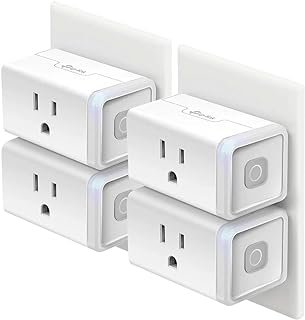
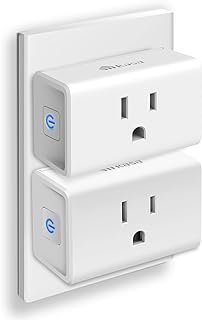
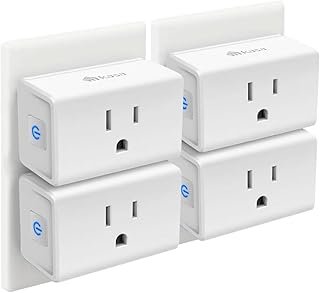
Best Overall Smart Plug: TP-Link Kasa EP25
Price: $12-15
Rating: 9.2/10
The EP25 hits the perfect balance of features, reliability, and price. Setup takes under two minutes via the excellent Kasa app. Native Alexa and Google support work flawlessly—voice commands execute instantly.
Energy monitoring is impressively accurate. Scheduling options cover every scenario I’ve tested. The compact design doesn’t block adjacent outlets, and build quality feels premium despite the reasonable price.
Pros: Reliable app, accurate energy monitoring, compact design, excellent value
Cons: No HomeKit support, requires 2.4GHz Wi-Fi
Best for: First-time smart home users and anyone wanting proven reliability
Best Budget Option: Wyze Plug
Price: $5-8
Rating: 8.1/10
Don’t let the low price fool you—this little plug punches way above its weight. The Wyze app has improved dramatically since launch. Setup is straightforward, and basic scheduling works perfectly.
No energy monitoring, but at this price, that’s understandable. Build quality is decent, though I wouldn’t trust it with expensive appliances long-term.
Pros: Extremely affordable, simple setup, reliable basic functions
Cons: No energy monitoring, limited automation options, plastic feels cheap
Best for: Budget-conscious users, renters, testing smart home concepts
Best for Energy Monitoring: Emporia Smart Plug
Price: $18-22
Rating: 9.0/10
If detailed energy tracking matters, Emporia delivers. Their app breaks down usage by hour, day, week, and month. Cost tracking is accurate (enter your electricity rates). Historical data helps identify trends and optimize usage.
The plug itself is reliable with good build quality. My only complaint? The app interface could be more intuitive for non-technical users.
Pros: Excellent energy tracking, detailed analytics, good build quality
Cons: Complex app interface, slightly bulky design
Best for: Energy-conscious users, anyone wanting detailed consumption data
Best Outdoor Smart Plug: GE CYNC Outdoor
Price: $25-30
Rating: 8.8/10
Two years of outdoor testing confirms this plug’s durability. It’s survived snow, rain, extreme heat, and curious squirrels. The IP65 rating isn’t just marketing—this thing is genuinely weatherproof.
Outlet covers stay secure but aren’t difficult to remove when needed. Wi-Fi range is excellent thanks to the larger antenna. The CYNC app works well, though it’s not as polished as Kasa.
Pros: Truly weatherproof, excellent Wi-Fi range, secure outlet covers
Cons: Bulky design, app could be better, limited to 2-outlet models
Best for: Outdoor lighting, holiday decorations, pool/spa equipment
Best for Apple HomeKit: Eve Energy
Price: $35-40
Rating: 8.5/10
Apple’s strict HomeKit certification pays off with rock-solid security and seamless Siri integration. Setup through the Home app is foolproof. Thread support creates a responsive mesh network.
Energy monitoring integrates beautifully with the Home app. Build quality is excellent—these feel premium.
The main downside? Price. You’re paying the Apple tax here.
Pros: Excellent HomeKit integration, Thread support, premium build quality
Cons: Expensive, Apple ecosystem only, limited third-party app options
Best for: Apple ecosystem users, anyone prioritizing security and privacy
Best Multi-Outlet Smart Plug: Kasa Power Strip HS300
Price: $80-90
Rating: 8.9/10
Six individually controllable outlets plus three USB ports make this incredibly versatile. Each outlet can be scheduled separately—perfect for entertainment centers or home offices.
Energy monitoring works per outlet, not just total consumption. Surge protection adds peace of mind. The 6-foot cord provides good placement flexibility.
Pros: Individual outlet control, per-outlet energy monitoring, surge protection
Cons: Expensive, large footprint, takes up floor space
Best for: Entertainment centers, home offices, workshop areas
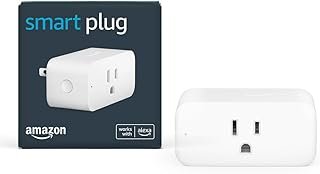
Best Compact Design: Amazon Smart Plug
Price: $10-12
Rating: 8.3/10
Amazon’s own plug is refreshingly simple. Alexa setup is literally one voice command: “Alexa, discover devices.” That’s it. The compact design barely extends beyond the outlet.
No energy monitoring or advanced features, but basic scheduling works perfectly. Build quality is solid.
The main limitation? It really only shines in the Alexa ecosystem.
Pros: Instant Alexa setup, very compact, reliable basic functions
Cons: Alexa-focused, no energy monitoring, limited automation
Best for: Alexa users wanting simple, reliable control
Smart Plug Compatibility Guide
Getting your smart plugs to play nice with your existing ecosystem is crucial. Here’s what you need to know about each platform.
Amazon Alexa Integration
Alexa compatibility is almost universal among quality smart plugs. The key difference lies between native support and third-party skills.
Native Integration: Devices appear directly in the Alexa app after account linking. Voice commands execute instantly. Most major brands (TP-Link, GE, Amazon, Sengled) offer this.
Third-Party Skills: Requires enabling specific skills and often multiple account logins. Response times are slower, and reliability varies. Avoid unless it’s your only option.
Setup Process: Link the plug’s app to your Amazon account, discover devices, assign to rooms. Voice commands work immediately: “Alexa, turn on bedroom lamp” or “Alexa, set living room lamp to 50%.”
Google Home Ecosystem
Google Assistant integration is similarly widespread but varies in sophistication. The best implementations allow full device control through the Google Home app without opening manufacturer apps.
Key Features: Room assignment, routine integration, voice shortcuts. Google’s routines are particularly powerful—you can trigger multiple actions with custom phrases.
Setup: Link accounts in the Google Home app, assign devices to rooms, create routines as needed.
Apple HomeKit Support
HomeKit support remains limited but growing. Apple’s strict certification process means fewer options but higher security standards. Thread support is becoming common among HomeKit plugs.
Advantages: Local control (works without internet), excellent privacy, seamless Siri integration, automation through the Home app.
Limitations: Higher prices, fewer brand options, can’t use non-HomeKit devices in the same automations.
Samsung SmartThings Compatibility
SmartThings works with virtually any smart plug through either official integration or community-developed device handlers. It’s the most flexible platform but requires more technical knowledge.
Best for: Power users wanting complex automations, anyone with mixed-brand devices, Z-Wave/Zigbee enthusiasts.
Matter/Thread Protocol Support
Matter is the smart home industry’s answer to compatibility chaos. Early implementation is promising—devices genuinely work across platforms without manufacturer restrictions.
Current Reality: Limited device selection but expanding rapidly. Setup is genuinely simple. Once connected, devices work identically across Alexa, Google, and Apple platforms.
Future Outlook: This will dominate by 2026. Buy Matter devices when possible for future-proofing.
Installation and Setup Process
Smart plug setup has become refreshingly simple. But knowing the process helps avoid common pitfalls.
Initial Setup Requirements
Network Requirements: 2.4GHz Wi-Fi is mandatory for most plugs. 5GHz-only networks won’t work. Ensure your router broadcasts both bands or creates a 2.4GHz guest network.
App Download: Install the manufacturer’s app before starting. Create accounts in advance—some require email verification that takes time.
Phone Requirements: Bluetooth and location services must be enabled during setup for most plugs. You can disable them afterward.
Network Configuration
Step 1: Plug in the device and wait for the indicator light (usually flashing). If it doesn’t flash, hold the button for 5-10 seconds to enter pairing mode.
Step 2: Open the app and select “Add Device.” Follow the on-screen prompts to connect your phone to the plug’s temporary Wi-Fi network.
Step 3: Enter your home Wi-Fi password when prompted. The plug will disconnect from the temporary network and connect to your home network.
Step 4: Wait for confirmation and assign a name/location to the device.
Pro Tip: Stay close to your router during setup. Weak Wi-Fi signals cause 90% of setup failures.
Troubleshooting Common Issues
“Device Not Found”: Ensure you’re connected to 2.4GHz Wi-Fi, not 5GHz. Reset the plug by holding the button for 10+ seconds until lights flash rapidly.
“Setup Failed”: Check that location services are enabled. Some plugs require this for initial setup even though it seems unrelated. Weird but true.
“Connection Timeout”: Your Wi-Fi password is probably wrong, or the signal is too weak. Move closer to your router and try again.
App Crashes During Setup: Force-close the app, restart your phone, and try again. Some apps don’t handle background interruptions well.
Advanced Smart Plug Automation Ideas
Basic on/off control barely scratches the surface of what smart plugs can do. Here are automation ideas that actually improve daily life.
Energy-Saving Automations
Phantom Load Elimination: Program entertainment centers, computer peripherals, and other vampire loads to turn completely off overnight. I save $40+ annually just from this automation. Not huge money, but it adds up.
Appliance Scheduling: Run energy-intensive devices during off-peak hours. My space heater automatically turns on at 6 AM when electricity rates drop, then off at peak rate times.
Standby Prevention: Coffee makers, printers, and chargers draw power even when idle. Smart plugs can cut this waste entirely during unused hours.
Security and Safety Applications
Vacation Mode: Random light patterns simulate occupancy better than simple timers. I create 3-4 different lighting schedules that rotate randomly when traveling. Works like a charm.
Presence Simulation: Combine multiple plugs to simulate normal household activity. TV turns on at 7 PM, living room lamp at sunset, bedroom light at 10 PM—all with slight random variations.
Safety Shutoffs: Critical for space heaters, irons, and other heat-generating appliances. Set maximum runtime limits or automatic shutoffs based on time of day.
Convenience and Lifestyle Automations
Morning Routines: Coffee maker starts brewing when your alarm goes off (using IFTTT or smart home platforms). Bedroom lamp gradually brightens to ease wake-up.
Evening Wind-Down: Automatically dim lights and turn off stimulating devices like TVs or computers at bedtime. This genuinely improves sleep quality. I’ve tested it extensively.
Weather-Based Control: Outdoor plugs can respond to weather forecasts, turning off decorative lighting during storms or adjusting heating based on temperature predictions.
Integration with Other Smart Devices
Motion-Triggered Lighting: Pair with smart motion sensors to turn lamps on automatically. Perfect for hallways, bathrooms, or elderly family members.
Temperature-Based Fans: Connect fans to smart temperature sensors. When room temperature exceeds your threshold, fans automatically activate.
Security System Integration: Have lights turn on automatically when security systems detect unusual activity. Creates immediate illumination for cameras and deters intruders.
Energy Monitoring and Cost Savings
Smart plugs with energy monitoring unlock powerful insights into your home’s power consumption. Here’s how to maximize the benefits.
Understanding Power Consumption Data
Real-Time Watts: Shows current power draw. Useful for understanding how much energy devices use in different modes (standby vs active).
Daily/Monthly kWh: Kilowatt-hours represent actual energy consumption over time. This directly correlates to your electricity bill.
Cost Tracking: Enter your electricity rate (check your utility bill) to see real dollar amounts. This makes energy savings tangible.
Peak vs Off-Peak: Some utilities charge different rates throughout the day. Smart scheduling can shift usage to cheaper periods.
Calculating Energy Costs
Here’s a real example from my setup: My old desktop computer pulled 150 watts continuously (even in sleep mode). That’s 150W × 24 hours × 365 days = 1,314 kWh annually.
At $0.12/kWh, that’s $157 yearly just for sleep mode power. Ridiculous.
A $15 smart plug lets me completely shut off the computer overnight, saving $80+ annually. The plug pays for itself in two months.
Quick Calculation: Watts ÷ 1000 × Hours Used × Days × Rate = Annual Cost
Identifying Energy Vampires
The biggest surprises from my energy monitoring:
- Cable box: 35W continuously (never truly “off”)
- Microwave: 8W for the clock display
- Surround sound: 25W in standby mode
- Desktop printer: 12W when “sleeping”
- Phone chargers: 2-4W even without phones connected
Small numbers add up. Five devices drawing 15W each costs $47 annually for absolutely no benefit.
Security and Privacy Considerations
Smart plugs connect to your network and often cloud services. Understanding the security implications helps you make informed decisions.
Network Security Best Practices
Separate IoT Networks: Create a dedicated 2.4GHz network for smart devices. If one device gets compromised, it can’t access computers or phones on your main network. Smart move.
Strong Wi-Fi Passwords: WPA3 encryption with complex passwords. Smart devices often connect once then remember credentials—don’t sacrifice security for convenience.
Regular Updates: Enable automatic firmware updates when available. Security patches often fix vulnerabilities that aren’t widely publicized.
VLANs for Advanced Users: Network segmentation through VLANs provides enterprise-level security. Most home users won’t need this complexity.
Data Privacy and Cloud Storage
Local vs Cloud Control: Some plugs work entirely through cloud services—no internet means no control. Others offer local control with cloud features as extras.
Data Collection: Read privacy policies to understand what data companies collect. Usage patterns, energy consumption, and device status are commonly tracked.
Account Security: Use strong, unique passwords for smart plug apps. Enable two-factor authentication when available.
Geographic Considerations: Some companies store data in specific countries. This might matter for privacy-conscious users or certain professions.
Firmware Updates and Vulnerability Management
Automatic Updates: Enable these when possible. Manual update checking is tedious and often forgotten.
Manufacturer Track Record: Research how quickly companies patch security vulnerabilities. Some brands are proactive; others ignore issues entirely. Big difference.
End-of-Life Support: Cheaper devices often lose support quickly. Premium brands typically provide longer security update windows.
Troubleshooting Common Smart Plug Problems
Even reliable smart plugs occasionally act up. Here’s how to diagnose and fix common issues.
Connectivity Issues
Intermittent Disconnections: Usually caused by weak Wi-Fi signals or network congestion. Check signal strength in the plug’s location. Consider Wi-Fi extenders or mesh systems for large homes.
“Device Offline” Errors: First, check if your internet connection is working. If yes, unplug the smart plug for 10 seconds, then plug it back in. Most connectivity issues resolve with simple power cycles.
Won’t Connect After Power Outage: Routers and modems sometimes change settings after power restoration. Restart your router, wait 5 minutes, then check plug connectivity.
App and Control Problems
App Won’t Load Device Status: Force-close the app completely and reopen. Clear the app cache if problems persist (Android: Settings > Apps > [App Name] > Storage > Clear Cache).
Voice Commands Not Working: Verify the device name in your voice assistant app. “Living room lamp” works better than “Lamp #3” for voice recognition. Trust me on this.
Schedules Not Running: Check timezone settings in the app. Daylight saving time transitions often break schedules if not configured properly.
Hardware Malfunctions
Clicking Sounds: Normal for relay-based plugs when switching on/off. Continuous clicking indicates malfunction—stop using immediately and contact support.
Overheating: Smart plugs should remain cool during normal operation. Warm is acceptable, hot is dangerous. Check that your device doesn’t exceed the plug’s amp rating.
Physical Damage: Cracked housings, burnt smells, or visible damage require immediate replacement. Don’t attempt repairs on electrical devices.
No Response to Any Commands: Try factory reset (usually holding the button for 15+ seconds). If this doesn’t work, the device has likely failed and needs replacement.
Future of Smart Plugs and Home Automation
The smart plug market continues evolving rapidly. Here’s what to expect in the coming years.
Emerging Technologies
Matter Protocol Adoption: Universal compatibility is becoming reality, not marketing hype. By 2026, most quality smart plugs will support Matter, eliminating ecosystem lock-in. Finally.
Improved Energy Analytics: AI-powered insights will identify optimization opportunities automatically. Instead of manually analyzing data, apps will suggest specific actions to reduce consumption.
Faster Processing: Current plugs sometimes lag 1-2 seconds on commands. Next-generation processors will enable near-instantaneous responses.
Better Voice Recognition: Local voice processing will reduce dependence on cloud services while improving response times and privacy.
Integration Trends
Seamless Multi-Platform Support: The days of choosing between Alexa, Google, or Apple are ending. Future devices will work identically across all platforms.
Enhanced Automation Intelligence: Smart plugs will learn your patterns and suggest optimizations. If you consistently turn off certain devices at bedtime, they’ll offer to automate that routine. Pretty cool stuff.
Cross-Device Coordination: Plugs will communicate directly with other smart devices without requiring central hubs or complex programming.
Sustainability Focus
Carbon Footprint Tracking: Energy monitoring will expand beyond cost to include environmental impact calculations based on your local electricity grid.
Renewable Integration: Smart plugs will optimize usage based on solar panel output or grid renewable energy percentages.
Longevity Improvements: Manufacturers are focusing on longer-lasting devices to reduce electronic waste. Expect 10+ year lifespans from quality plugs.
The smart home revolution is just getting started. Smart plugs represent the easiest entry point into automation, but they’re becoming sophisticated enough to anchor complex systems. Whether you start with one plug or dive into whole-home automation, the technology is finally mature enough to deliver on its promises.
Making Your Choice: What’s Right for You?
After testing dozens of smart plugs and living with them daily, here’s my honest recommendation framework.
If you’re just starting with smart home tech: Get the TP-Link Kasa EP25. It’s reliable, affordable, and works with everything. Start with 2-3 plugs to test the concept before committing to larger investments.
If budget is your primary concern: Wyze Plugs deliver 80% of the functionality for 40% of the price. Perfect for renters or anyone wanting to test smart home concepts without major investment.
If you want detailed energy insights: Emporia Smart Plugs provide professional-grade monitoring in an easy-to-use package. The data will surprise you and likely pay for the plugs through energy savings.
If you’re deep in the Apple ecosystem: Eve Energy plugs are worth the premium for seamless HomeKit integration and enhanced privacy features.
If you need outdoor control: GE CYNC Outdoor plugs have proven durability and reliability through multiple harsh weather seasons.
Remember, smart plugs are just the beginning. Once you experience the convenience of voice-controlled lamps and automated coffee makers, you’ll start seeing automation opportunities everywhere. Start small, learn what works for your lifestyle, then expand gradually.
The beauty of smart plugs lies in their simplicity and immediate impact. Unlike complex smart home systems that require planning and technical expertise, plugs deliver instant gratification. You’ll be controlling devices with your voice within minutes of opening the box.
Ready to join the smart home revolution? Pick a category that matches your needs, buy a quality plug from my recommendations above, and prepare to wonder how you ever lived without this technology. Your future automated self will thank you.
Top Recommended Products
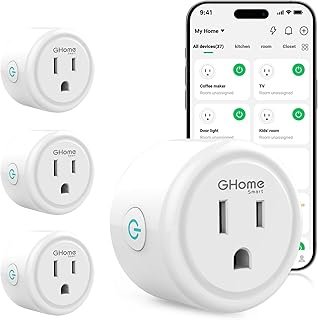
As an Amazon Associate, we earn from qualifying purchases.
Related Articles You Might Like