The Evolution of Smart Home Technology in 2026

Key Technological Advances
The landscape of **smart home automation 2026** has been revolutionized by breakthrough technologies that seemed impossible just a few years ago. AI-powered home assistants now feature enhanced natural language processing capabilities, allowing for more intuitive conversations and complex command interpretation. These systems can understand context, follow multi-step instructions, and even anticipate user needs based on behavioral patterns.
Edge computing has emerged as a game-changer, processing data locally on devices like your **smart speaker** or **smart thermostat** rather than relying solely on cloud servers. This advancement significantly reduces latency while enhancing privacy and reliability. Meanwhile, advanced machine learning algorithms enable predictive automation that learns from your daily routines, automatically adjusting your **smart light** settings and climate control without manual programming.
Industry Standards and Protocols
The widespread adoption of the Matter protocol has finally delivered on the promise of seamless device interoperability. In 2026, consumers no longer need to worry about whether their **smart lock** will work with their existing ecosystem. Matter has created a unified standard that allows devices from different manufacturers to communicate effortlessly, eliminating the frustrating compatibility issues that plagued earlier smart home implementations.
5G and WiFi 7 technologies provide the backbone for these enhanced capabilities, offering faster, more reliable connections that support the increased data demands of modern smart homes. These connectivity improvements enable real-time communication between dozens of devices while maintaining stable performance even during peak usage periods.
Market Trends and Consumer Adoption
Market projections for 2026 show smart home technology reaching unprecedented adoption rates, with over 65% of households in developed markets incorporating some form of automation. Leading manufacturers like Google, Amazon, Apple, and Samsung continue to drive innovation while new players focus on specialized niches such as energy management and health monitoring.
Consumer preferences have notably shifted toward privacy-focused solutions, with many users prioritizing local processing and transparent data policies. This trend has pushed manufacturers to develop more secure, privacy-respecting alternatives that process sensitive information on-device rather than in the cloud.
Essential Smart Home Automation Categories

Lighting and Climate Control
Modern **smart light** systems in 2026 go far beyond simple on/off control or color changing. Advanced lighting solutions now incorporate circadian rhythm optimization, automatically adjusting color temperature and brightness throughout the day to support natural sleep cycles and enhance well-being. These systems analyze natural light levels, user activity, and even health data to create personalized lighting experiences that boost productivity and improve sleep quality.
Climate control has evolved into sophisticated zone-based systems where each room maintains optimal conditions based on occupancy, time of day, and individual preferences. Your **smart thermostat** now communicates with window sensors, air quality monitors, and even wearable devices to create microclimates that adapt to your family’s needs while maximizing energy efficiency through machine learning algorithms.
Security and Surveillance Systems
The security category has witnessed remarkable advances in AI-powered threat detection. Modern **smart camera** systems can distinguish between family members, delivery personnel, and potential intruders with remarkable accuracy. These cameras feature advanced facial recognition, package detection, and behavioral analysis that reduces false alerts while ensuring genuine security threats receive immediate attention.
**Smart lock** technology has evolved to include multiple authentication methods, from traditional key codes to biometric scanners and smartphone proximity detection. Many systems now offer temporary access codes, activity logs, and integration with delivery services for secure package reception even when you’re away from home.
Entertainment and Audio Systems
Entertainment systems in 2026 seamlessly blend with your home’s automation ecosystem. Multi-room audio systems synchronize with lighting and climate control to create immersive experiences automatically. Your **smart speaker** serves as both an entertainment hub and automation controller, supporting 8K streaming capabilities while managing voice commands for the entire home.
Advanced integration allows your entertainment system to communicate with other smart devices, automatically dimming lights for movie time or adjusting room acoustics based on content type and time of day.
Kitchen and Appliance Automation
Kitchen automation has transformed meal preparation and food management. Smart appliances now feature predictive maintenance alerts, energy monitoring, and automated cooking programs that adjust based on ingredients and dietary preferences. Intelligent refrigerators track food inventory, suggest recipes based on available ingredients, and even place grocery orders automatically.
These systems integrate with your broader home automation network, coordinating with ventilation systems during cooking and adjusting lighting for different kitchen activities throughout the day.
Planning Your Smart Home Ecosystem

Assessing Your Home’s Infrastructure
Before diving into **smart home automation 2026**, conducting a thorough infrastructure assessment ensures optimal performance and prevents costly retrofitting later. Start by analyzing your network infrastructure, ensuring robust WiFi coverage throughout your home. Dead zones that might barely affect smartphone usage can severely impact smart device performance, particularly for devices like **smart camera** systems that require consistent high-bandwidth connections.
Evaluate your electrical system’s capacity for smart switches and outlets. Older homes may require electrical upgrades to safely support the increased load from multiple smart devices. Consider the placement of your electrical panel and the feasibility of adding dedicated circuits for high-power devices like electric vehicle chargers or whole-home battery systems.
Document existing devices and appliances to assess compatibility with modern smart home platforms. Many newer appliances already include smart features that can integrate with your automation system, potentially saving significant upgrade costs.
Choosing the Right Platform
The platform decision significantly impacts your long-term satisfaction and expansion options. Google Home excels in natural language processing and search integration, making it ideal for users who prefer conversational control. Amazon Alexa offers the broadest device compatibility and skill ecosystem, perfect for users wanting maximum automation options.
Apple HomeKit provides superior privacy and security features with seamless integration into the Apple ecosystem, though with more limited device selection. Samsung SmartThings offers excellent flexibility for tech-savvy users who want granular control over automation rules and device management.
The Matter protocol’s widespread adoption in 2026 means your initial platform choice isn’t as binding as before. However, each platform’s unique features, voice assistant capabilities, and user interface still make the selection important for daily usability.
Budget Planning and Prioritization
Smart home budgeting requires balancing immediate convenience with long-term value. Starter setups focusing on essential devices like a **smart thermostat**, **smart light** bulbs, and **smart speaker** typically range from $500-1,000 and provide immediate energy savings and convenience benefits.
Intermediate systems adding security features with **smart lock** and **smart camera** installations, plus expanded lighting and climate control, generally cost $2,000-5,000. Advanced whole-home automation with professional installation, integrated security systems, and energy management can range from $10,000-25,000 or more.
Calculate ROI by considering energy savings, insurance discounts for security systems, and potential property value increases. Many users see 10-20% energy cost reductions within the first year, while comprehensive security systems often qualify for homeowners insurance discounts of 5-15%.

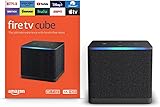
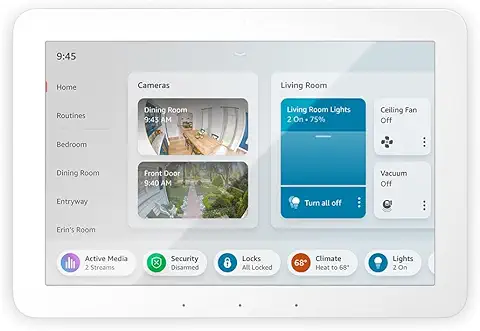
Check each product page for other buying options. Price and other details may vary based on product size and color.
Highly rated by customers for quality and value. Click to see current pricing and customer reviews.
More Top-Rated Options


Installation and Setup Best Practices

DIY Installation Guidelines
Most modern smart home devices are designed for straightforward DIY installation, but proper preparation ensures smooth setup and optimal performance. Begin with devices that require no electrical work, such as **smart speaker** units, plug-in **smart light** bulbs, and battery-powered sensors. These provide immediate functionality while you plan more complex installations.
For hardwired devices like smart switches or **smart thermostat** installations, ensure your home’s electrical system is compatible and that you’re comfortable working with electrical connections. Always shut off power at the circuit breaker and use a voltage tester to confirm circuits are de-energized before beginning work.
Document your existing wiring configurations with photos before making changes. This documentation proves invaluable for troubleshooting and future modifications. Keep installation manuals and warranty information organized digitally for easy access when configuring automation rules or troubleshooting issues.
Professional Installation Considerations
Complex installations involving structural modifications, high-voltage electrical work, or integrated security systems often benefit from professional installation. Certified installers understand local building codes, proper wire routing, and integration techniques that ensure reliable operation and maintain your home’s warranty coverage.
Professional installation particularly benefits whole-home automation systems, security camera networks requiring PoE (Power over Ethernet) connections, and smart electrical panels with energy monitoring capabilities. These installations often include system commissioning, user training, and warranty support that adds significant value beyond the initial installation.
When selecting installers, verify certifications from device manufacturers and industry organizations. Many manufacturers offer training programs for installers, ensuring they understand the latest features and best practices for optimal system performance.
Network Security and Privacy Setup
Securing your smart home network requires implementing multiple layers of protection from the initial setup. Create a dedicated network segment for smart home devices, separating them from computers and smartphones that contain sensitive personal information. Many modern routers support guest networks that work perfectly for this purpose.
Configure strong, unique passwords for all devices and enable two-factor authentication wherever available. Regular security updates are crucial – enable automatic updates for devices that support them, and establish a monthly schedule to check for updates on devices requiring manual installation.
Review and customize privacy settings for each device and associated mobile apps. Many devices collect more data than necessary for basic operation, and manufacturers often enable extensive data sharing by default. Opt out of unnecessary data collection while ensuring essential functionality remains intact.
Advanced Automation and AI Integration
Creating Intelligent Scenes and Routines
The power of **smart home automation 2026** truly emerges when individual devices work together in coordinated scenes and routines. Modern automation platforms enable sophisticated multi-device scenes that respond to complex triggers and conditions. Your morning routine might begin when your **smart thermostat** detects movement, triggering **smart light** bulbs to gradually brighten while your **smart speaker** provides weather updates and your coffee maker begins brewing.
Advanced scene creation goes beyond simple time-based triggers. Conditional automation considers factors like occupancy detection, outdoor weather conditions, energy pricing, and even calendar events. For instance, your “Away” scene might activate only when all family members’ smartphones leave the geofenced area, ensuring pets or guests don’t accidentally trigger security protocols.
Modern platforms allow for complex logic chains where one automation can trigger multiple subsequent actions based on current conditions. Your security system might activate differently based on the time of day, expected return time from calendar data, or whether housekeeping services are scheduled.
Machine Learning and Predictive Automation
AI integration in 2026 smart homes learns from user behavior patterns to create predictive automation that anticipates needs before explicit commands. Your **smart thermostat** doesn’t just maintain set temperatures – it learns when you typically adjust settings and proactively makes changes based on weather forecasts, energy pricing, and detected occupancy patterns.
Predictive maintenance represents another crucial application where AI monitors device performance and usage patterns to predict potential failures. Your **smart camera** system might alert you to degraded image quality suggesting lens cleaning is needed, while smart appliances can schedule maintenance based on usage intensity rather than arbitrary time intervals.
Machine learning algorithms continuously refine automation rules based on user feedback and changing preferences. The system learns when you override automatic settings and gradually adjusts its behavior to better match your preferences without requiring explicit reprogramming.
Voice Control and Natural Language Processing
Voice interaction has evolved from simple command recognition to conversational AI that understands context, intent, and complex multi-step requests. Your **smart speaker** can process requests like “Make the house ready for movie night with the kids” and automatically dim living room lights, close smart blinds, set the thermostat for comfortable viewing, and activate the entertainment system at appropriate volume levels.
Advanced natural language processing enables follow-up questions and clarifications. You can ask your smart home to “Turn off all the lights upstairs” and then specify “except the bathroom” without repeating the entire command. The system maintains context throughout extended conversations, making voice control feel more natural and efficient.
Integration with external data sources allows voice commands that incorporate real-time information. Commands like “Set the perfect temperature for tonight’s weather” leverage weather forecasts and your comfort preferences to automatically adjust climate control systems.
Energy Management and Sustainability
Smart Energy Monitoring
Comprehensive energy management in **smart home automation 2026** begins with detailed monitoring and analysis of consumption patterns. Modern smart electrical panels provide circuit-level monitoring, identifying which appliances and systems consume the most energy throughout different periods. This granular data enables targeted optimization strategies that maximize savings without compromising comfort.
Real-time energy dashboards display current consumption, historical trends, and projected monthly costs, helping homeowners make informed decisions about usage patterns. Smart plugs and switches with built-in energy monitoring extend this capability to individual devices, revealing surprising energy consumers and standby power drains that accumulate significant costs over time.
Integration with utility companies’ smart meter systems enables participation in demand response programs where your **smart thermostat** and other high-consumption devices automatically adjust during peak demand periods in exchange for reduced energy rates or rebates.
Solar Integration and Battery Storage
Solar panel integration with smart home systems optimizes energy production and consumption coordination. Smart inverters communicate with your home automation system to prioritize energy-intensive activities like electric vehicle charging or heating/cooling adjustments during peak solar production periods.
Battery storage systems work seamlessly with automation platforms to provide backup power during outages while optimizing energy costs through strategic charging and discharging. The system learns your usage patterns and utility rate structures to minimize grid energy purchases during expensive peak periods while ensuring adequate backup power reserves.
Advanced systems participate in virtual power plant programs where your excess battery capacity helps stabilize the electrical grid during high demand periods, generating additional income while supporting renewable energy integration at the community level.
Automated Energy Optimization
Intelligent energy optimization considers multiple factors simultaneously to minimize costs while maintaining comfort and convenience. Time-of-use rate optimization automatically shifts energy-intensive activities to low-cost periods – your electric vehicle charges overnight when rates are lowest, while thermal mass in your home is pre-cooled during off-peak hours to reduce air conditioning needs during expensive peak periods.
Peak shaving strategies use battery storage and load management to reduce maximum demand charges that can represent 30-50% of commercial electrical bills and are increasingly common in residential rate structures. Your **smart thermostat** coordinates with other major loads to prevent simultaneous operation that creates expensive demand spikes.
Carbon footprint tracking provides detailed analysis of your home’s environmental impact, including both direct energy consumption and indirect impacts from grid electricity sources. This data helps prioritize efficiency improvements and renewable energy investments for maximum environmental benefit.
Security and Privacy Considerations
Cybersecurity Best Practices
Protecting your **smart home automation 2026** system requires implementing comprehensive cybersecurity measures that evolve with emerging threats. Network segmentation remains the foundation of smart home security, isolating IoT devices from critical systems like computers and smartphones. Advanced routers now offer automatic device identification and policy application, simplifying the process of maintaining secure network topology.
Regular security audits should assess all connected devices for firmware updates, default password usage, and unnecessary features that increase attack surfaces. Many devices ship with features enabled that most users don’t need – disabling unused capabilities like remote access or cloud connectivity reduces potential vulnerability points while often improving performance and privacy.
Intrusion detection systems specifically designed for IoT environments monitor network traffic for suspicious patterns that might indicate compromised devices. These systems can automatically isolate problematic devices while alerting users to potential security breaches before significant damage occurs.
Data Privacy Protection
Understanding and controlling data collection practices across your smart home ecosystem requires careful review of privacy policies and active management of consent settings. Device manufacturers often collect far more data than necessary for basic operation, including detailed usage patterns, voice recordings, and behavioral analysis that can reveal intimate details about your daily life.
Local processing alternatives minimize data exposure by keeping sensitive information within your home network. Modern **smart speaker** devices can process many voice commands locally, while **smart camera** systems can perform facial recognition and motion detection without uploading video streams to cloud services.
Data retention policies vary significantly between manufacturers and service providers. Some companies store voice recordings and video footage indefinitely unless users actively delete them, while others automatically purge data after specified periods. Understanding these policies helps you choose products that align with your privacy preferences.
Physical Security Integration
Modern **smart lock** and **smart camera** systems integrate seamlessly with traditional security approaches while adding intelligent automation capabilities. Multi-layered authentication combines traditional methods like keys or keypads with modern biometric scanning and smartphone proximity detection, creating security systems that are both more convenient and more secure than traditional alternatives.
Emergency response protocols ensure your smart security system remains functional during power outages, internet disruptions, or deliberate jamming attempts. Battery backup systems maintain critical security functions, while cellular backup connections provide communication pathways when broadband internet is unavailable.
Insurance companies increasingly recognize smart home security systems with monitoring and documentation capabilities. Many insurers offer significant discounts for homes with professionally monitored smart security systems, often offsetting monthly monitoring costs while providing enhanced protection and peace of mind.
Future-Proofing Your Smart Home Investment
Emerging Technologies to Watch
The trajectory of **smart home automation 2026** points toward even more sophisticated technologies that will reshape home interaction paradigms. Augmented and virtual reality integration promises to revolutionize home control interfaces, allowing users to visualize and manipulate smart home settings through immersive 3D environments. Imagine adjusting your **smart light** configurations by simply looking at fixtures and gesturing, or reviewing **smart camera** footage through spatial interfaces that show events in their actual locations.
Robotics integration is advancing beyond simple vacuum cleaners to include multifunctional home assistants capable of complex tasks like organization, cleaning, and even basic maintenance. These systems will coordinate with existing automation infrastructure, using data from your **smart thermostat** and occupancy sensors to optimize their activities around your family’s schedule and preferences.
Advanced sensor technologies including air quality monitoring, electromagnetic field detection, and even health monitoring through ambient sensors will provide unprecedented insight into home environments and occupant well-being, enabling automation responses that actively promote health and safety.
Scalability and Upgrade Strategies
Building scalable smart home systems requires choosing platforms and devices that support modular expansion and backward compatibility. The Matter protocol’s continued evolution ensures that devices purchased today will integrate with future technologies, but planning upgrade pathways remains crucial for maximizing long-term value.
Modular system design principles suggest starting with core infrastructure like robust networking and a central automation hub, then adding peripheral devices gradually. This approach allows you to spread costs over time while ensuring each addition integrates seamlessly with existing components. Your initial **smart speaker** and **smart thermostat** installations can serve as the foundation for increasingly sophisticated automation as your needs and budget evolve.
Future-ready infrastructure investments like structured wiring, high-capacity electrical service, and professional-grade networking equipment provide the foundation for advanced technologies that aren’t yet mainstream but will become standard in coming years.
Long-term Maintenance Planning
Sustainable smart home ownership requires proactive maintenance planning that addresses both technological obsolescence and physical device lifecycles. Establishing regular maintenance schedules ensures devices continue operating optimally while identifying potential issues before they cause system failures.
Warranty tracking and replacement planning help manage the financial aspects of smart home ownership. Creating a database of purchase dates, warranty periods, and expected lifespans for all devices enables budget planning for replacements and upgrades. Many manufacturers offer extended warranty programs that become cost-effective for comprehensive smart home installations.
Technology refresh cycles vary significantly between device categories – **smart speaker** devices might require replacement every 3-5 years as voice processing capabilities advance, while **smart lock** hardware often remains functional for decades with occasional software updates. Understanding these cycles helps prioritize upgrade investments for maximum impact and value.
Related Articles You Might Like