- Key Takeaways
- How Smart Sprinkler Technology Works
- Key Features to Look for When Shopping
- Water and Cost Savings You Can Expect
- Reducing Water Consumption Significantly
- Lower Monthly Utility Bills
- Installation Options: DIY Vs Professional Setup
- DIY Installation Steps
- Professional Service Benefits
- Top Smart Sprinkler Systems on the Market
- Maintenance Tips for Optimal Performance
- Frequently Asked Questions
- Can Smart Sprinkler Systems Work During a Power Outage?
- Are Smart Sprinklers Compatible With Well Water Systems?
- Do Smart Sprinklers Void My Homeowner’s Insurance or HOA Agreements?
- Can I Control Multiple Properties From One Smart Sprinkler App?
- What Happens to My Warranty if I Move Houses?
- Conclusion
- Related Reading
- Related Reading



Smart sprinkler systems integrate weather data, soil moisture sensors, and programmable controllers to automate your irrigation with precision. You’ll reduce outdoor water consumption by 20-60% compared to traditional methods, potentially saving $200-500 annually on water bills. These systems adjust schedules automatically based on hyperlocal forecasts, evapotranspiration rates, and ground saturation levels to prevent overwatering and runoff. WaterSense-certified controllers enhance zone-specific watering for different plant types and soil conditions. Understanding installation options, top-rated models, and maintenance protocols will help you improve your investment’s efficiency and longevity.
Key Takeaways
- Smart sprinklers use weather data, soil sensors, and programmable controllers to automatically adjust watering schedules and prevent overwatering.
- Look for WaterSense-certified systems with multi-sensor technology, hyperlocal weather integration, and zone-specific programming for optimal performance.
- Expect to reduce outdoor water use by 20-50% and save $200-500 annually on water bills.
- Top systems include Rachio 3, Hunter Hydrawise Pro-HC, RainMachine Touch HD, Orbit B-hyve XD, and Toro Evolution.
- Maintain accuracy through quarterly sensor calibration, biannual valve flushing, firmware updates, and seasonal schedule adjustments.
How Smart Sprinkler Technology Works

Smart sprinkler systems integrate weather data, soil moisture sensors, and programmable controllers to deliver precise irrigation based on your landscape’s actual needs.
You’ll gain command over every watering cycle through advanced sensor technology that monitors ground saturation levels in real-time, preventing overwatering and runoff.
Weather integration connects your system to local meteorological stations, automatically adjusting schedules when rain’s forecasted or temperatures drop. You won’t waste water on landscapes that don’t need it.
The controller processes inputs from multiple sources—evapotranspiration rates, precipitation data, and soil conditions—calculating ideal run times for each zone.
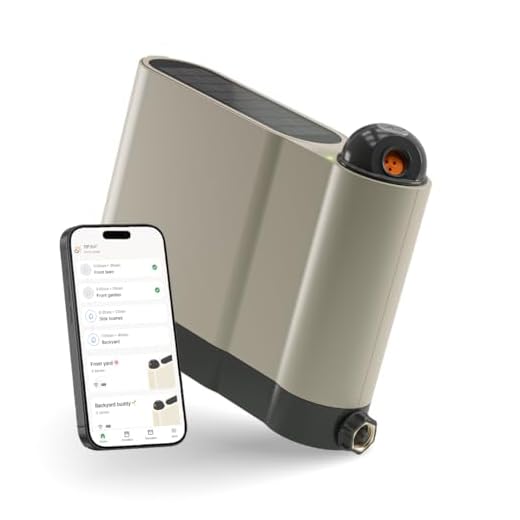
You can partition your property into distinct irrigation zones, each programmed for specific plant types, sun exposure, and soil composition.
Remote access through smartphone apps puts system control at your fingertips, enabling instant adjustments and monitoring from anywhere.
This technology changes passive watering into an intelligent, responsive system that enhances efficiency while maintaining landscape health.
Key Features to Look for When Shopping
When evaluating smart sprinkler systems, you’ll want to prioritize weather-based controllers that meet WaterSense certification standards—these models reduce outdoor water use by an average of 15% compared to conventional timers.
Focus on systems with multi-sensor technology that monitors soil moisture, rainfall, temperature, and humidity in real-time.
Advanced weather integration capabilities access hyperlocal forecasts and adjust schedules automatically, preventing unnecessary watering cycles before, during, and after precipitation events.
Demand controllers with zone-specific programming that accommodates different plant types, sun exposure levels, and soil compositions across your property.
Look for systems offering flow monitoring to detect leaks and line breaks immediately—potentially saving thousands of gallons and preventing costly damage.
Verify compatibility with your existing valve configuration and wire count.
Select models with sturdy mobile apps that provide detailed usage analytics, seasonal adjustment recommendations, and remote override capabilities.
GPS-enabled systems automatically configure schedules based on your property’s precise location and microclimate conditions.
Water and Cost Savings You Can Expect

Smart sprinkler systems can reduce outdoor water consumption by 20-50% compared to conventional irrigation methods through weather-based scheduling and soil moisture monitoring.
You’ll see these efficiency gains translate directly to lower monthly water bills, with typical homeowners saving $200-500 annually depending on lawn size and local water rates.
The system’s precision watering eliminates overwatering waste while maintaining ideal landscape health, maximizing both environmental and financial returns on your investment.
Reducing Water Consumption Significantly
Traditional irrigation systems waste 30-50% of water through imprecise scheduling, evaporation, and runoff, but smart sprinkler systems cut consumption by an average of 20-60% depending on your current setup and local climate conditions.
You’ll achieve maximum water conservation through sensor-driven adjustments that respond to real-time soil moisture levels, rainfall data, and weather forecasts. The system automatically skips watering cycles when unnecessary, preventing overwatering that drowns your landscape investment.
Advanced zone management delivers precise water volumes to specific plant types and sun exposures. Your irrigation efficiency multiplies when the controller calculates evapotranspiration rates—the exact amount of water your landscape loses through evaporation and plant transpiration.
This data-driven approach eliminates guesswork, giving you complete control over every gallon distributed across your property.
Lower Monthly Utility Bills
By reducing water consumption by 20-60%, you’ll see immediate financial returns that convert your smart sprinkler system from an expense into an investment.
Your monthly water bills will decrease proportionally to consumption reduction—if you’re currently spending $150 monthly on irrigation, expect $30-90 in savings.
These systems eliminate the inefficiencies costing you money: manual overwatering, broken sprinkler heads running undetected, and irrigation during rainfall.
Advanced water conservation features like soil moisture sensors and weather-based scheduling enhance every watering cycle.
For budget planning purposes, calculate your ROI by dividing system cost by monthly savings—most installations pay for themselves within 2-4 years.
You’re not just conserving water; you’re reclaiming capital that manual systems waste through imprecise operation.
Installation Options: DIY Vs Professional Setup
You’ll face a critical decision when implementing your smart sprinkler system: whether to install it yourself or hire a certified irrigation professional.
DIY installation requires understanding zone mapping, valve wiring, and controller programming, while professional services provide system design expertise and warranty protection.
Your choice impacts installation time, system optimization, and long-term maintenance costs.
DIY Installation Steps
Installing a smart sprinkler system yourself requires careful planning and methodical execution across several distinct phases.
First, map your property’s irrigation zones based on water pressure, plant types, and sun exposure. You’ll need essential tools required: pipe cutters, trenching equipment, voltage meters, and waterproof wire connectors.
Begin by shutting off your main water supply and installing the smart controller at your water source. Run underground PVC lines to each zone, maintaining 8-12 inch burial depth. Mount valve manifolds strategically for ideal coverage.
Critical installation tips include testing system pressure before connecting sprinkler heads, programming zone-specific watering schedules, and calibrating moisture sensors.
Verify all electrical connections meet weatherproof standards. Execute a full system test, adjusting spray patterns to eliminate overspray and enhance water efficiency.
Professional Service Benefits
While DIY installation offers cost savings, professional service providers deliver expertise that greatly reduces implementation risks and long-term system failures.
You’ll gain access to certified technicians who execute precise zone mapping, ideal sprinkler head placement, and controller programming calibrated to your landscape’s specific requirements.
Professional expertise guarantees proper wire gauge selection, valve box waterproofing, and backflow preventer compliance with local regulations.
Service reliability extends beyond installation—you’re securing warranty protection, scheduled maintenance protocols, and rapid troubleshooting support.
Professionals integrate weather stations, soil moisture sensors, and flow meters with technical precision that enhances water efficiency.
They’ll configure advanced scheduling algorithms and pressure optimization that DIY installations rarely achieve.
You’re investing in systematic performance rather than risking costly repairs from improper installation techniques.
Top Smart Sprinkler Systems on the Market

Since water conservation mandates and utility costs continue rising across residential markets, today’s smart sprinkler systems integrate weather-based controllers, soil moisture sensors, and zone-specific programming to reduce consumption by 20-50% compared to conventional timers.
Top brands deliver distinct competitive advantages. Rachio 3 dominates user reviews with 16-zone capability, hyperlocal weather intelligence, and smooth HomeKit integration.
Hunter Hydrawise Pro-HC excels in commercial-grade durability, supporting up to 54 zones with predictive watering algorithms.
RainMachine Touch HD operates offline using self-learning NOAA forecasting, eliminating subscription dependencies.
You’ll find Orbit B-hyve XD targets budget-conscious installations without sacrificing EPA WaterSense certification.
Toro Evolution provides contractor-preferred reliability through modular expansion and multi-site management protocols.
Specification priorities include zone capacity matching your property layout, communication protocol compatibility (Wi-Fi, Zigbee, or hardwired), and rainfall/soil sensor inputs.
Weather API accuracy directly impacts savings—verify data source granularity before purchasing.
Maintenance Tips for Optimal Performance
Execute these critical maintenance protocols:
- Calibrate soil moisture sensors quarterly – mineral buildup and root intrusion compromise accuracy, forcing system troubleshooting and recalibration.
- Flush zone valves biannually – sediment accumulation restricts flow rates and damages diaphragms.
- Update controller firmware immediately – patches fix scheduling bugs and improve seasonal adjustments algorithms.
- Winterize before freezing temperatures – drain all lines, disable rain sensors, and activate system hibernation mode.
Rain sensor maintenance demands particular attention.

Clean debris from collection surfaces monthly and verify wireless connectivity between sensors and controllers.
Implement seasonal adjustments by reprogramming watering durations as temperatures shift.
Replace aging components before failures cascade through your network, maximizing return on your automation investment.
Frequently Asked Questions
Can Smart Sprinkler Systems Work During a Power Outage?
Most smart sprinkler systems won’t operate during power outages since they’re electrically powered.
However, you can maintain control by installing power backup solutions like uninterruptible power supplies (UPS) or battery backup systems. These guarantee your irrigation schedule continues uninterrupted.
Alternatively, you’ll want to take into account irrigation alternatives such as pressure-compensating drip systems or gravity-fed networks that don’t require electricity.
Implementing redundant power sources gives you complete authority over your water management system regardless of grid status.
Are Smart Sprinklers Compatible With Well Water Systems?
Yes, you’ll find smart sprinklers perfectly compatible with well water systems—power meets precision.

Your well water compatibility depends on adequate pressure (typically 30-50 PSI) and flow rate capacity. You’ll enhance irrigation efficiency by programming zone schedules that prevent pump overwork and refine water delivery cycles.
Install a pressure regulator and flow sensor to protect your system’s performance. You’re fundamentally commanding complete control over your well’s output, changing raw groundwater into calculated, automated irrigation that respects your system’s limitations while dominating your landscape’s hydration needs.
Do Smart Sprinklers Void My Homeowner’s Insurance or HOA Agreements?
Smart sprinklers typically won’t void your coverage, but you’ll need to verify insurance implications with your provider—especially regarding water damage liability.
Most policies favor automated leak detection features.
For HOA regulations, you’re usually compliant since smart systems maintain landscape standards more consistently.
However, you must review your specific covenants regarding installation modifications and outdoor equipment visibility.
Don’t assume compliance—document approvals before installation.
Your system’s water efficiency often strengthens your position with both entities.
Can I Control Multiple Properties From One Smart Sprinkler App?
You’ll command your irrigation empire from a single dashboard—yes, most smart sprinkler apps support multi-property management.

You can monitor and control unlimited sites through centralized app features, switching between locations with precision. Each property maintains independent schedules, zone configurations, and weather adjustments.
This enhanced property management approach increases water efficiency across your entire portfolio while giving you complete operational oversight.
You’ll reduce costs, improve performance, and maintain authority over every system from anywhere.
What Happens to My Warranty if I Move Houses?
Your warranty typically remains valid through a warranty transfer process, allowing you to relocate your smart sprinkler system to your new property.
You’ll maintain full coverage by documenting the transfer with your manufacturer. However, verify system compatibility with your new landscape’s configuration, including zone requirements and water pressure specifications.
Most manufacturers support one transfer during the warranty period, enabling you to protect your investment across properties while maintaining ideal irrigation control.
Conclusion
You’ve explored the core components, features, and savings potential of smart sprinkler systems. Now it’s time to pull the trigger on automation that’ll slash your water consumption by up to 50%. Whether you’re installing controllers yourself or hiring professionals, you’re investing in precision irrigation that adapts to weather patterns, soil conditions, and plant requirements. Your system will deliver targeted hydration while eliminating runoff and overwatering—transforming your outdoor space into a water-efficient oasis that runs itself.
🔌 Editor’s Pick
Editor’s Pick: A smart home hub to unify your sprinkler, thermostat, plugs, bulbs, and doorbell.
Make Your Home Smarter
Device reviews, automations, and the deals worth grabbing.
Related Articles You Might Like