

Remember when switching on a light meant simply flipping a wall switch? Thomas Edison’s incandescent bulb lit up the world for over a century. But we’ve come a long way from that single tungsten filament.
Now, I can dim my bedroom lights with my voice. Schedule my kitchen to glow warm orange during dinner. And have my home office automatically adjust its lighting based on the time of day – all from a single app on my phone.
Smart lighting has exploded from a tech enthusiast’s dream into a mainstream necessity. According to recent market research, over 45% of US households now have at least one smart lighting device. That number’s climbing fast. After personally testing more than 50 smart home devices (and trust me, my electricity bill shows it), I’ve learned something important.
Smart bulbs aren’t just about convenience anymore. They’re about creating environments that actually improve how we live, work, and sleep.
What’s made 2025 the perfect year to jump into smart lighting? The technology has finally matured. We’ve got better connectivity standards. More reliable apps. And prices that won’t break the bank. Whether you’re looking to start small with a single bulb or transform your entire home, this guide will walk you through everything you need to know to make the right choice for every room.
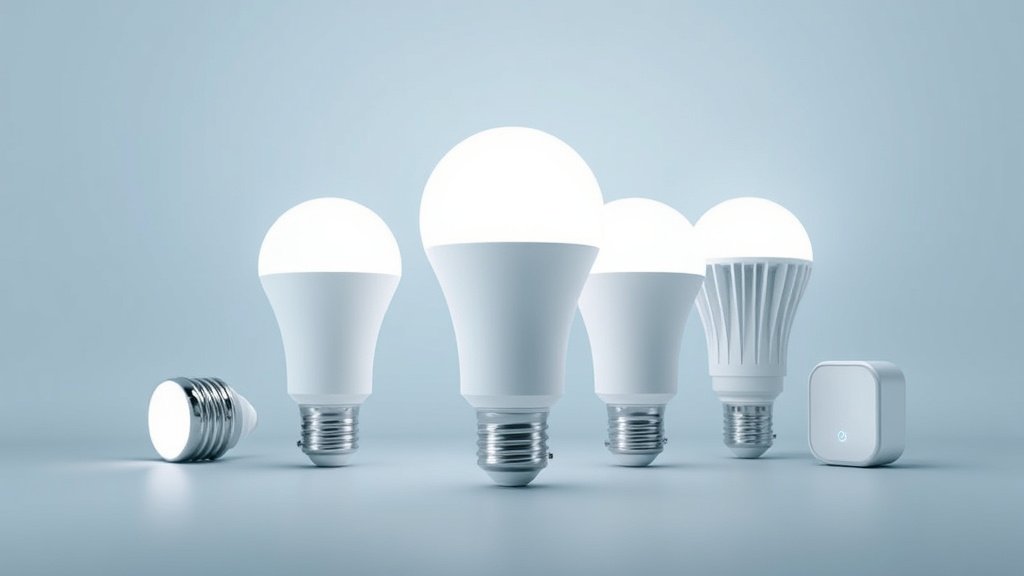
What Makes a Smart Light Bulb Worth Buying in 2025
Essential Smart Features
Let me be honest – not all smart bulbs are created equal. I’ve tested enough duds to know what separates the game-changers from the gimmicks. The best smart bulbs in 2025 nail three core features: reliable connectivity, intuitive app control, and genuine intelligence.
First up, voice control that actually works. There’s nothing more frustrating than shouting “Alexa, turn off the living room lights” three times while your hands are full of groceries. The top-tier bulbs I’ve tested respond consistently to voice commands across Amazon Alexa, Google Assistant, and Apple’s Siri.
But here’s the thing – they also work when your internet goes down, thanks to local processing capabilities.
App control has come a long way too. The best apps let you create custom scenes (I’ve got mine set up for “Movie Night,” “Dinner Party,” and “Deep Work”). They schedule lighting based on your actual routine. And even sync with your calendar. LIFX and Philips Hue lead the pack here. Though Govee has surprised me with some clever features at a fraction of the cost.
Then there’s the intelligence factor. Modern smart bulbs can automatically adjust throughout the day to support your circadian rhythm. They’ll gradually warm up in the evening to help you wind down. Then blast you with energizing cool light in the morning. After using this feature for six months, I can tell you it genuinely makes a difference in how I feel.
Connectivity Standards
This is where things get technical. But stick with me – it matters more than you’d think.
WiFi bulbs are the easiest to set up (just connect to your home network). But they can bog down your router if you install too many. I learned this the hard way after adding 15 WiFi bulbs and watching my internet speeds tank.
Zigbee-based systems like Philips Hue require a hub. But they create their own mesh network that’s incredibly reliable. The more Zigbee devices you add, the stronger the network gets. Bluetooth bulbs are great for single-room setups but have limited range.
Here’s my take after testing all three: start with WiFi if you want just a few bulbs. Go Zigbee if you’re planning a whole-home setup. Skip Bluetooth unless you’re only lighting a small apartment.
The big game-changer for 2025? Matter standard support. This new protocol lets devices from different brands work together seamlessly. If you’re investing in smart lighting now, prioritize bulbs that support Matter. Your future self will thank you when you want to add other smart home devices.
Energy Efficiency and Longevity
Smart LEDs typically use 75-80% less energy than traditional incandescent bulbs. But not all LEDs are equal. Look for Energy Star certification and check the lumens-per-watt rating. The best performers I’ve tested hit 100+ lumens per watt.
Most quality smart bulbs are rated for 15,000-25,000 hours of use. That’s roughly 15-20 years if you use them 3 hours per day. Factor in the energy savings, and even premium bulbs like Philips Hue pay for themselves within 2-3 years.
Top Smart Light Bulbs for Living Rooms
Best Overall: Premium Options
Philips Hue White and Color Ambiance remains my top pick for living rooms. Even after testing dozens of alternatives. Yes, it’s expensive at around $50 per bulb. But there’s a reason it’s still the gold standard.
The color accuracy is phenomenal. I can recreate the exact warm glow of sunset or the crisp blue of midday sky. The Hue app offers more customization than any competitor, with pre-built scenes for everything from reading to parties.
But what really sets it apart? The ecosystem integration. If you’ve got other Hue products, they work together flawlessly.
LIFX A21 comes in as a close second. The colors are actually more vibrant than Philips Hue. And the bulb doesn’t require a hub since it connects directly to WiFi. I love the LIFX app’s music sync feature for parties – watching the lights dance to the beat never gets old. At $45-50 per bulb, it’s priced similarly to Hue but offers more raw lumens (1100 vs 800).
Best Value: Budget-Friendly Picks
Govee Matter WiFi Color Bulb has blown me away at just $12-15 per bulb. The color range isn’t quite as wide as premium options. But for most people, you won’t notice the difference. The Govee app includes some fun features like screen mirroring that syncs your lights to whatever’s on your TV.
Wyze Color Bulb offers incredible value at under $12. The colors are decent. The app is simple but functional. And it integrates well with other Wyze products. I’ve had these running in my guest bedroom for over a year with zero issues.
Best for Entertainment: Color-Changing Bulbs
For living rooms where you want to create ambiance, LIFX takes the crown. The 16 million color options aren’t just marketing hype. The color transitions are smooth, and the brightness range is impressive. I can set it to 1% for late-night movie watching or crank it to full brightness for cleaning.
Nanoleaf Essentials deserves a mention here too. The bulbs work with Thread (which powers Matter), so they’re incredibly responsive. The color-changing effects in their app are more sophisticated than most competitors.
Best Smart Bulbs for Bedrooms
Sleep-Optimized Features
Your bedroom lighting can make or break your sleep quality. After struggling with insomnia and trying every sleep hack imaginable, I learned that the right lighting makes a massive difference.
Warm color temperatures (2700K and below) are crucial for evening wind-down. Blue light from cool LED bulbs can suppress melatonin production. Keeping you wired when you should be getting sleepy. The best bedroom bulbs can shift from energizing daylight (5000K+) in the morning to candlelight-warm (2200K) at night.
Philips Hue Go is my personal favorite for bedside lighting. It’s a portable light that can sit on your nightstand or be mounted to the wall. The built-in battery means you can carry it around. And the touch controls work even when your phone isn’t handy.
The gradual dimming feature slowly reduces brightness over 30 minutes – perfect for falling asleep while reading.
Wake-Up Light Recommendations
Sunrise simulation sounds gimmicky until you try it. Instead of jarring alarms, these bulbs gradually brighten over 15-30 minutes to mimic natural sunrise. I’ve been using this feature for two years, and I rarely need my phone alarm anymore.
LIFX Clean goes beyond basic wake-up lighting. It includes high-frequency HEV light that’s supposed to have antibacterial properties (though I can’t verify the health claims). What I can confirm is that the light quality is excellent. And the warm-to-cool transitions feel natural.
Philips Hue White Ambiance offers the most refined sunrise simulation. You can customize how quickly the light ramps up. Set different schedules for weekdays and weekends. And even sync it with your sleep tracking app.
Romantic and Relaxation Settings
Let’s talk about mood lighting. Smart bulbs excel here because you can create the perfect ambiance instantly. Deep reds and warm oranges create intimacy without the fire hazard of candles.
For relaxation, I’ve found that slowly cycling through purple and blue hues helps me decompress after stressful days. Most color-changing bulbs include preset “relax” scenes, but creating your own based on your preferences works better.
Kitchen and Dining Room Smart Lighting Solutions
Task Lighting Requirements
Kitchens need serious lumens. When you’re wielding sharp knives and working with hot surfaces, you want bright, clear lighting. I recommend at least 3000 lumens for most kitchen spaces, which usually means multiple bulbs or higher-output options.
Color rendering is crucial here too. A high CRI (Color Rendering Index) above 90 ensures food colors look natural. There’s nothing worse than preparing a beautiful meal only to realize the lettuce looked fresh under your kitchen lights but appears wilted in natural light.
GE Cync Dynamic Effects bulbs have impressed me for kitchen use. They pump out 1600 lumens per bulb at full brightness. And the tunable white range (2000K-7000K) lets you shift from bright task lighting while cooking to warm ambient lighting during meals.
Ambient Dining Lighting
Dining rooms benefit from layered lighting. You want bright task lighting when setting the table or cleaning up. But warm, dimmed ambiance during meals. Smart bulbs make this transition seamless.
Sengled Smart WiFi LED bulbs offer excellent dimming performance. They can go down to 1% brightness without flickering – perfect for romantic dinners. At around $8 per bulb, they’re also budget-friendly if you need to outfit multiple fixtures.
Under-Cabinet and Accent Options
Don’t overlook under-cabinet lighting. Philips Hue Lightstrip Plus isn’t technically a bulb, but it’s perfect for adding task lighting under kitchen cabinets. The adhesive backing makes installation simple. And you can cut the strips to fit any length.
For accent lighting in glass cabinets or above counters, smaller format smart bulbs like TP-Link Kasa Filament WiFi Bulbs provide vintage aesthetics with modern smarts.
Smart Lighting for Home Offices and Study Areas
Productivity-Enhancing Features
Working from home taught me how much lighting affects productivity. Dim, warm lighting makes me sleepy by 2 PM. Harsh, cool lighting gives me headaches during long video calls. The sweet spot for focus work? 4000K-5000K color temperature at comfortable brightness levels.
Philips Hue White Ambiance excels in office settings. The “Concentrate” scene provides energizing cool light that keeps me alert during afternoon slumps. The “Relax” scene helps me transition to evening mode when I’m done working.
What’s really clever is scheduling lighting changes throughout the day. I have my office lights automatically shift from cool and bright in the morning to progressively warmer as evening approaches. This helps maintain my circadian rhythm even when I’m stuck indoors all day.
Eye Strain Reduction
Computer work demands flicker-free lighting. Cheap LED bulbs can flicker at frequencies that cause eye strain and headaches, even if you can’t consciously see the flicker. Quality smart bulbs use better drivers that eliminate this problem.
LIFX Day & Dusk bulbs are specifically marketed for this application. They offer precise color temperature control and flicker-free operation. I’ve used them during long coding sessions, and the difference is noticeable – less eye fatigue and fewer headaches.
Position your smart bulbs to minimize screen glare too. Side lighting or overhead lighting usually works better than backlighting your monitor.
Focus and Concentration Optimization
Some smart bulb apps include focus modes that gradually adjust lighting to optimize concentration. Govee’s app has a “Focus” scene that slowly shifts to cooler, brighter light over 15 minutes. Then holds that setting for your specified work duration.
I’ve experimented with Pomodoro technique lighting – bright, cool light during 25-minute work sprints. Then warmer, dimmer light during 5-minute breaks. It’s surprisingly effective for maintaining focus.
Bathroom Smart Bulbs: Safety and Functionality
Moisture-Resistant Options
Bathrooms present unique challenges. Steam, humidity, and temperature fluctuations can kill electronics quickly. Look for bulbs rated IP44 or higher for bathroom use.
Feit Electric Smart WiFi Bulbs offer good moisture resistance at reasonable prices. I’ve had them in my bathroom for over 18 months without issues. The quick warm-up time is crucial too. Nobody wants to wait for lights to reach full brightness in a cold bathroom.
Vanity and Mirror Lighting
Bathroom lighting for grooming needs high CRI and even distribution. Side-mounted vanity lights work better than overhead fixtures for reducing shadows on your face.
TCP Smart Bulbs provide excellent color rendering and come in various form factors to fit different vanity fixtures. The tunable white feature lets you shift from energizing morning light to relaxed evening ambiance.
Night Light Features
Motion-activated night lighting is a game-changer for 2 AM bathroom trips. Some smart bulbs can be programmed to provide dim, warm light when motion is detected during nighttime hours.
While most smart bulbs don’t include built-in motion sensors, they can integrate with smart motion sensors through home automation platforms like SmartThings or Hubitat.
Outdoor Smart Lighting Solutions
Weather-Resistant Features
Outdoor smart bulbs face extreme conditions. Rain, snow, UV exposure, and temperature swings from below freezing to over 100°F. IP65 or IP66 ratings are essential for fully exposed fixtures.
Philips Hue Outdoor bulbs have proven reliable in my porch light through two winters and summers. The weatherproof rating is IP44, which works for covered areas but isn’t suitable for fully exposed fixtures.
Recommended for You
🛒 Philips Hue Starter Kit
As an Amazon Associate we earn from qualifying purchases.
For completely exposed applications, Ring Smart Bulbs offer IP65 rating and integrate well with Ring security systems. They’re not as feature-rich as Hue bulbs, but they’re built like tanks.
Security and Safety Applications
Outdoor smart lighting can enhance home security through automated schedules and motion activation. Lights that turn on when you arrive home or flash when security cameras detect motion can deter intruders.
LIFX Outdoor bulbs offer scheduling based on sunset/sunrise times, which automatically adjusts throughout the year. You can also set vacation modes that randomly turn lights on and off to simulate occupancy.
Motion integration works best with dedicated smart switches rather than smart bulbs. But bulbs can provide the lighting effects once motion is detected.
Landscape and Accent Lighting
Color-changing outdoor bulbs create fantastic holiday and special occasion lighting. LIFX Outdoor and Nanoleaf Outdoor bulbs offer weather-resistant color options that can transform your home’s exterior.
Solar-powered smart bulbs are still limited in features and reliability. But they’re improving. For landscape lighting where running power cables is impractical, solar options from Ring and Philips provide basic smart features without the wiring hassle.
Smart Light Bulb Ecosystems and Compatibility
Platform Integration
Choosing smart bulbs means choosing an ecosystem. Philips Hue offers the most comprehensive platform with the widest device selection. But you pay a premium. The Hue ecosystem includes bulbs, light strips, motion sensors, switches, and outdoor lighting that all work seamlessly together.
SmartThings and Hubitat hubs can integrate multiple brands. Giving you more flexibility but requiring more technical knowledge to set up properly.
Hub Requirements
Hub-based systems like Philips Hue create more reliable networks but add complexity and cost. Hubless WiFi bulbs are simpler to set up but can overwhelm your router and may be less responsive.
My recommendation? Start hubless if you want fewer than 10 smart bulbs. Go hub-based if you’re planning whole-home automation or want the most reliable performance.
Cross-Brand Compatibility
Matter standard is changing the game here. Bulbs that support Matter can work with any Matter-compatible hub or assistant. Reducing vendor lock-in concerns.
Nanoleaf, Eve, and newer Sengled bulbs support Matter, making them good future-proof choices even if you’re not sure which ecosystem you’ll ultimately prefer.
Installation and Setup Guide
Basic Installation Steps
Installing smart bulbs is usually as simple as screwing in a regular bulb. If your fixtures are compatible. Check the bulb size (A19, BR30, etc.), base type (E26, GU10, etc.), and wattage limits before purchasing.
Some dimmer switches can interfere with smart bulbs. If your bulbs flicker or behave erratically, try installing them in fixtures without dimmer switches first.
App Configuration
Each brand has its own app, and setup processes vary. Most follow this pattern:
Keep your WiFi password handy during setup. And make sure your phone is connected to the same network you want the bulbs to use.
Troubleshooting Common Issues
The most common problem I encounter? Bulbs that won’t connect to WiFi. This usually happens when your router uses band steering (combining 2.4GHz and 5GHz networks under one name). Many smart bulbs only work on 2.4GHz networks.
If bulbs become unresponsive, power cycling (turning the fixture off and on) often fixes connection issues. For persistent problems, most apps include a “reset” function that returns the bulb to factory settings.
Budget Considerations and Value Analysis
Cost Per Room Breakdown
Let’s talk real numbers. Outfitting an average living room with premium Philips Hue bulbs costs $200-400 depending on how many fixtures you have. Mid-range options like LIFX or GE Cync run $100-200 per room. Budget brands like Wyze or Govee can light a room for $50-100.
These upfront costs seem steep compared to $2 incandescent bulbs. But the math changes when you factor in energy savings and lifespan.
Energy Savings Calculator
A 60-watt equivalent LED smart bulb uses about 9 watts. If you replace five 60-watt incandescents with smart LEDs and use them 5 hours per day, you’ll save roughly $50 per year in electricity costs (assuming $0.12 per kWh).
Over the 15-20 year lifespan of LED bulbs, that’s $750-1000 in energy savings. Not counting the cost of replacing short-lived incandescent bulbs multiple times.
Long-term Investment Value
Smart bulbs pay for themselves through energy savings within 2-4 years. Depending on your electricity rates and usage patterns. The convenience and features are essentially free after that payback period.
Premium bulbs like Philips Hue hold their value better and receive longer software support. Budget options may stop receiving app updates after a few years, potentially losing features or compatibility with newer devices.
Future Trends in Smart Lighting for 2025 and Beyond
Emerging Technologies
Li-Fi technology, which transmits data through light waves, could make smart bulbs part of your home’s internet infrastructure. Imagine downloading files through your ceiling light. It sounds like science fiction, but early implementations already exist.
Advanced circadian rhythm support goes beyond simple warm/cool adjustments. Future bulbs may sync with fitness trackers and health apps to optimize lighting based on your actual sleep patterns and stress levels.
AI and Machine Learning Integration
Smart bulbs are getting actually smart. AI-powered systems can learn your routines and adjust lighting automatically without manual programming. Some newer systems can detect when you’re watching TV versus reading and adjust brightness accordingly.
Integration with health monitoring devices opens interesting possibilities. Bulbs that brighten gradually when your fitness tracker detects you’re waking up. Or that shift to calming colors when your smartwatch indicates high stress levels.
Sustainability Focus
Environmental concerns are driving improvements in LED efficiency and manufacturing sustainability. Some companies now offer recycling programs for old smart bulbs, and manufacturing processes are becoming more environmentally friendly.
Longer lifespans and better efficiency reduce the environmental impact of lighting. The best 2025 smart bulbs should last 25,000+ hours while using even less energy than current models.
Making the Smart Choice
After testing countless smart bulbs and living with them daily for years, here’s what I’ve learned: start with the room where you spend the most time. Focus on features you’ll actually use. And don’t feel pressured to replace every bulb at once.
For most people, I recommend starting with Govee or Wyze bulbs to test the waters. They’re affordable enough that you won’t feel bad if smart lighting isn’t for you. But capable enough to showcase the real benefits.
If you love the experience and want to expand, Philips Hue offers the most mature ecosystem and best long-term support. LIFX provides better colors and brightness for those who prioritize light quality.
The transformation that smart lighting brings to daily life surprised me. It’s not just about convenience – though being able to turn off lights I forgot about from anywhere in the world is nice. It’s about creating environments that support how I want to feel and what I want to accomplish.
Your home’s lighting affects your mood, productivity, sleep quality, and energy levels more than you might realize. Smart bulbs give you precise control over these factors in ways that weren’t possible with traditional lighting.
Start small. Experiment with different features. And gradually build the lighting system that makes your home work better for you. The technology has finally reached the point where it just works, and the prices have dropped to where it’s accessible for most budgets.
Ready to make the switch? Pick one room, choose bulbs that fit your budget and needs, and experience the difference smart lighting can make. Once you’ve lived with lights that automatically adjust throughout the day and respond to your voice, you’ll wonder why you waited so long to upgrade.
Related Articles You Might Like